“Do you know what these 120 days have taken away, Xavier?”
The question came in a whisper so quiet that it almost disappeared beneath the steady sounds of the ICU machines.
For most of the night, Xavier’s mother remained beside his hospital bed, holding the same hand she had held countless times during the past four months. She had asked him many questions during those long nights. She had told him stories from home. She had reminded him of people waiting for him. She had spoken about baseball, school, friends, and ordinary afternoons that once seemed too small to matter.
But that night was different.
After 120 days without Xavier waking, she was no longer thinking only about the accident or the hospital room.
She was thinking about time.
And about everything time had continued to take while her son remained still.
## 120 Days Xavier Could Never Get Back
Four months can sound short when written on a calendar.
Inside an ICU room, however, four months can feel like an entire lifetime.
The baseball season Xavier had waited for was already passing without him. Games had been played. Teammates had stood beneath stadium lights. Gloves had struck against baseballs, coaches had shouted instructions from dugouts, and scoreboards had changed inning after inning.
Xavier had missed all of it.
His mother had once imagined herself sitting in the stands, watching him run onto the field.
Instead, she had spent those same weeks sitting beside a hospital bed.
Even Xavier’s appearance had quietly recorded the passage of time.
His hair had grown past the length he normally liked. His face seemed different beneath the hospital lights. Clothes that had been prepared for another season remained untouched.
And then there were his sneakers.
They were still neatly stored away, waiting for a boy who had not been able to wear them for four months.
His mother had recently looked at them and realized something heartbreaking.
Xavier was still growing.
Time had not stopped simply because his life had.
## A Mother’s Question in the Middle of the Night
She leaned closer to him.
“Do you know what these 120 days have taken away, Xavier?”
There was no answer.
She squeezed his hand.
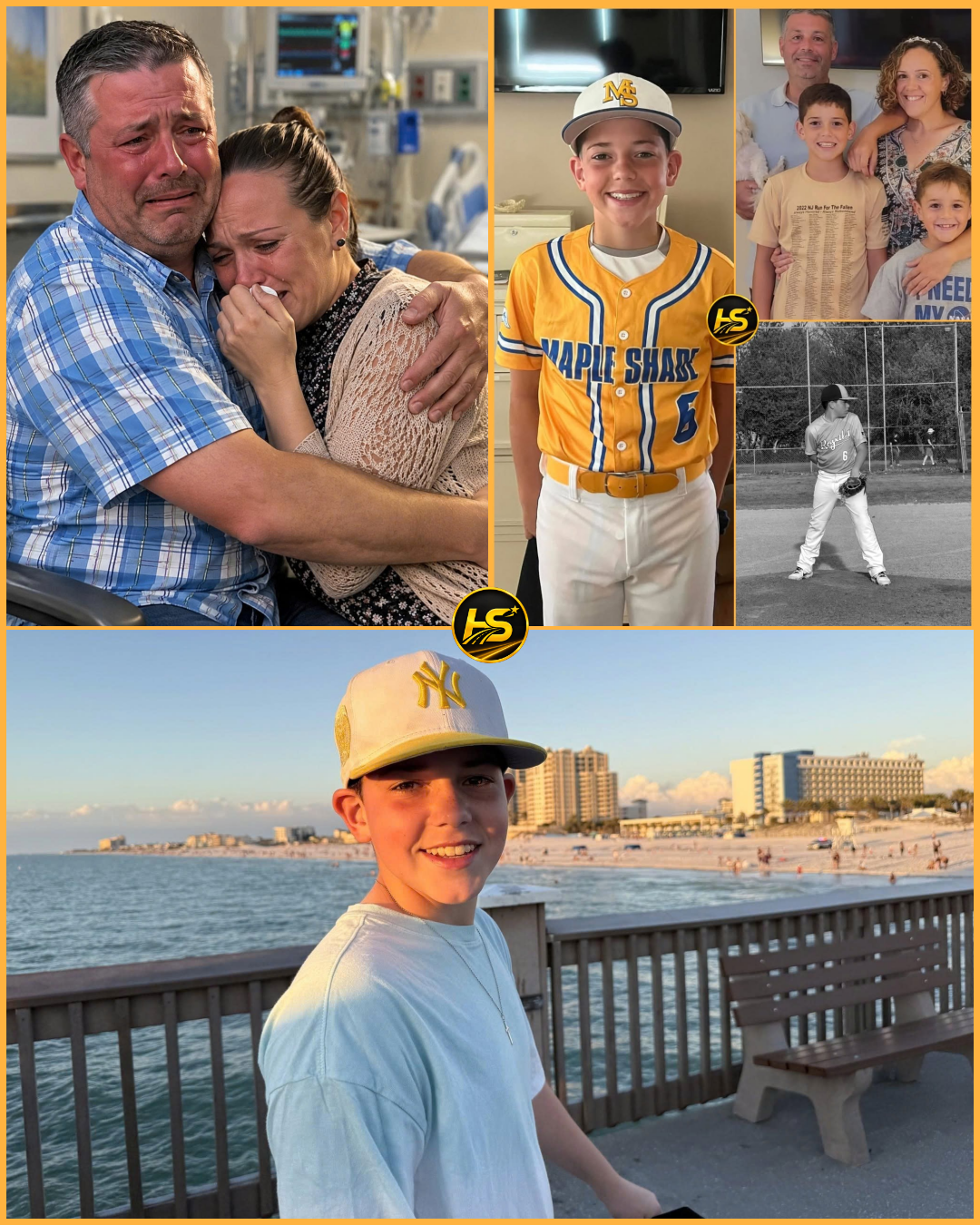
She talked about the baseball games he had missed.
She talked about the people who continued asking about him.
She talked about how much his hair had grown and joked softly that he would probably complain about it if he could see himself.
Then her voice broke.
She lowered her head onto the side of the bed and began crying.
What hurt most was not simply the number of days.
It was knowing that she could not save those days for him.
A mother can protect photographs.
She can preserve a baseball glove.
She can keep a bedroom exactly as her child left it.
But she cannot place four months inside a box and return them later.
That realization had become one of the hardest parts of waiting.
## The ICU Had Become a Second Home
By the fourth month, the hospital no longer felt unfamiliar.
Xavier’s family knew the sounds of the machines.
They recognized the rhythm of nurses entering and leaving.
They knew which lights remained on overnight and when the hallway became quietest.
They had learned that life inside an ICU was measured differently.
Instead of weekends, there were shift changes.
Instead of baseball scores, there were numbers on monitors.
Instead of planning vacations or school schedules, there were conversations about tests, observations, medication and the next medical review.
Every morning brought the same question.
Would today be different?
Most mornings had answered with silence.
Still, the family continued showing up.
## Why Small Changes Became So Important

When a person has remained unresponsive for a prolonged period, families can naturally become intensely focused on tiny movements.
A finger twitch.
A change in breathing.
An eyelid moving.
A different response when someone speaks.
But doctors must distinguish between automatic reflexes and purposeful responses. A movement that looks meaningful to a loved one may not necessarily indicate conscious awareness.
That uncertainty can be emotionally exhausting.
For Xavier’s mother, however, every tiny change carried hope.
She knew she could not turn every movement into a miracle.
But she also could not stop watching.
So she continued holding his hand.
She continued talking.
And she continued waiting.
## The Doctor Stopped Near the Window
Late that night, the doctor on duty entered the room.
He checked Xavier’s information and looked carefully at the monitoring equipment.
For several moments, he said nothing.
Xavier’s mother watched him from across the bed.
After four months in the hospital, she had become unusually 𝘴єn𝘴iᩚtiᩚvє to silence from medical staff.
A long pause could mean nothing.
Or it could mean everything.
The doctor eventually walked toward the window.
“These past 120 days have taken far too much from your son,” he said quietly.
Then he paused.
“But if something we’ve been watching happens again tomorrow morning, we may have something worth examining much more closely.”
Xavier’s mother immediately lifted her head.

“What?”
The doctor did not promise that Xavier would wake up.
He did not call it a miracle.
Instead, he explained that the team wanted to repeat an assessment and compare Xavier’s responses under carefully controlled conditions.
The distinction mattered.
Hope was allowed.
Certainty was not.
## What the Medical Team Would Be Looking For
The next morning, the fictionalized scenario centers on one crucial question:
Could Xavier produce a response that appeared consistent and purposeful rather than random?
A single movement would not necessarily provide an answer.
The team would need repetition.
They would watch whether Xavier reacted to a familiar voice.
They would observe his eyes.
They would compare responses to different instructions and stimuli.
Most importantly, they would look for consistency.
For a family that had waited 120 days, this might sound frustratingly cautious.
But neurological recovery cannot be responsibly measured through emotion alone.
The same sign may need to appear more than once before doctors can interpret its significance.
Xavier’s mother understood that.
Still, she barely slept.
## The Morning After 120 Days
Shortly after sunrise, the room began filling with quiet activity.
The medical team prepared for the assessment.
Xavier’s mother stood beside the bed.
She had spent the entire night wondering what the doctor meant.

Now there was nothing left to do except watch.
One clinician spoke Xavier’s name.
Nothing happened.
They waited.
Another instruction followed.
Again, there was no obvious response.
His mother looked down.
For a moment, the familiar disappointment began returning.
Then someone asked Xavier to perform a simple movement.
The room became completely silent.
Several seconds passed.
And in this dramatized scenario, Xavier’s fingers slowly tightened.
Not dramatically.
Not enough to send anyone shouting through the hallway.
Just a small movement.
The clinicians waited and repeated the instruction later.
A similar movement appeared again.
His mother immediately began crying.
But the doctors remained careful.
One of them stepped closer to the monitor while another documented what had happened.
Nobody declared that Xavier had awakened.
Nobody promised what would happen next.
Instead, they repeated the assessment.
## The Result the Family Had Waited Months to Hear
After reviewing the morning observations, the fictional medical team explained that Xavier appeared to have shown a response significant enough to justify additional neurological evaluation.
It was not the end of the story.

It was not even proof that full recovery would follow.
But after four months dominated by uncertainty, it represented something Xavier’s family desperately needed:
a reason to keep looking.
His mother returned to the bedside.
She wrapped both hands around Xavier’s hand.
Hours earlier, she had asked him what 120 days had taken away.
Now she whispered something different.
“We’ll worry about everything you missed later.”
She looked at her son’s face.
“The season. School. Your shoes. All of it.”
Her voice shook again.
“Right now, just stay with us.”
## Four Months Had Changed Everything
Even if Xavier eventually opened his eyes, waking would not magically erase the previous 120 days.
Recovery after a prolonged period of unresponsiveness could involve further testing, rehabilitation and enormous uncertainty.
There might be progress followed by setbacks.
There might be days when nothing seemed to change.
His family knew that one encouraging response could not answer every question.
But they also understood something they had learned during four months inside the ICU.
Hope does not always arrive as a dramatic awakening.
Sometimes it arrives as a movement so small that everyone in the room has to stop talking to make sure they really saw it.
For 120 days, time had kept moving without Xavier.
His baseball season had continued.
His hair had grown.
His sneakers had become too small.
The world outside the hospital had refused to wait.
But on that morning, his mother stopped thinking about everything time had taken away.
She held his hand and waited for one more movement.
Because perhaps the most important question was no longer what Xavier had lost during those 120 days.
It was what might still be waiting for him when he finally came back.