MADELEINE McCANN SUSPECT CHRISTIAN BRUECKNER NO LONGER UNDER 24-HOUR POLICE SURVEILLANCE AFTER COURT RULING
A German court has ruled that convicted 𝘴єx offender Christian Brueckner should no longer be subjected to round-the-clock police surveillance, after a new expert assessment found he did not meet the legal threshold for the highest risk category. However, he will remain under electronic monitoring.
KIEL, GERMANY — Christian Brueckner, the man named by German prosecutors as the prime suspect in the disappearance of British toddler Madeleine McCann, is set to lose the constant police surveillance that has followed him since his release from prison last year.
On Friday, October 30, 2026, the Schleswig-Holstein Higher Regional Court rejected a police appeal seeking to continue the 24-hour monitoring of the 49-year-old.
The decision followed a new psychological and psychiatric assessment that classified Brueckner as presenting an average risk of reoffending, rather than the high-risk level previously used to justify continuous observation.
According to ITV News, the court also considered concerns that the intensive surveillance was interfering with his rehabilitation.
The decision means officers who had been following his movements around the clock must stop the operation. However, Brueckner will continue to wear an electronic ankle monitor and remain subject to other legal supervision requirements.
 COURT SAYS LEGAL REQUIREMENTS FOR CONSTANT SURVEILLANCE ARE NOT MET
Brueckner’s lawyer, Philipp Marquort, welcomed the ruling, saying two judicial decisions had now reached the same conclusion.
He argued that the legal conditions required for continuous police observation were no longer satisfied.
Marquort also said his client should be given the opportunity to rebuild his life after completing his prison sentence.
Brueckner reportedly reacted positively when informed of the decision, repeatedly thanking his lawyer.
Police had argued that continued surveillance was necessary to protect public safety. Local residents in Kiel have also expressed concern about the decision.
However, the court ultimately rejected the police appeal.
WHY WAS BRUECKNER BEING WATCHED 24 HOURS A DAY?
Brueckner was released from prison in September 2025 after serving a seven-year sentence for raping a 72-year-old American woman in Portugal in 2005.
Following his release, German authorities introduced intensive monitoring measures because of concerns about the possibility of further offences.
Police officers subsequently followed him around the clock, both to monitor his movements and to help protect him from potential vigilante attacks.
The new court ruling brings that continuous physical surveillance to an end, although electronic tracking and other restrictions remain in place.
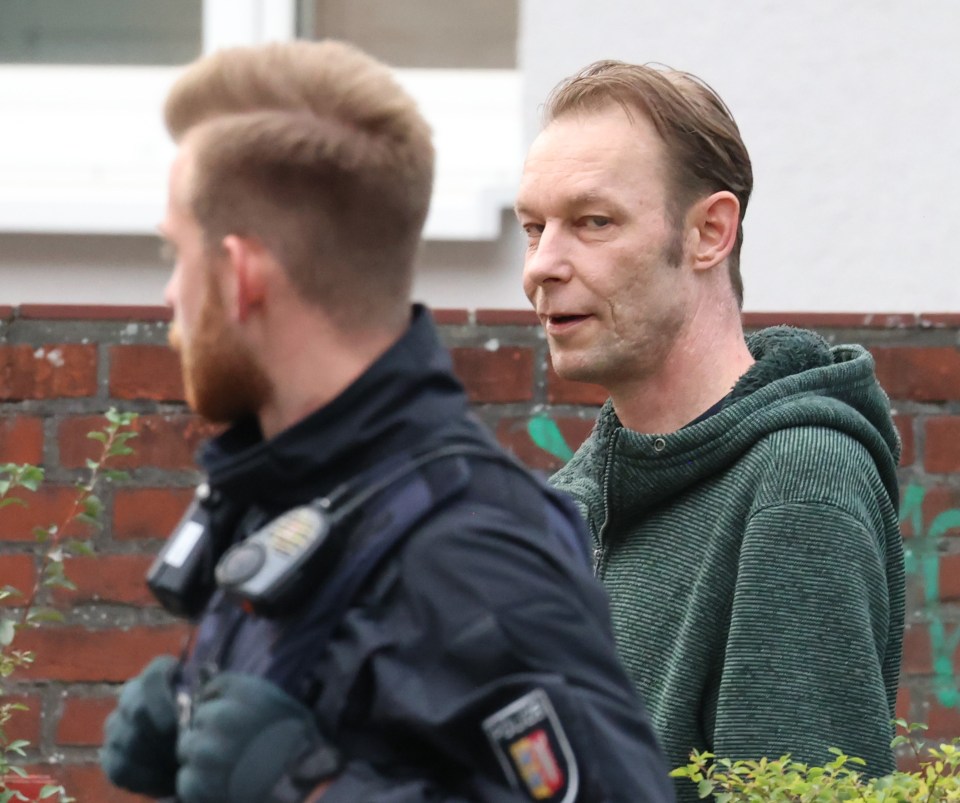 HIS NAME REMAINS LINKED TO MADELEINE McCANN’S DISAPPEARANCE
Brueckner became a central figure in the investigation into Madeleine McCann’s disappearance in June 2020, when German prosecutors publicly identified him as their prime suspect.
Three-year-old Madeleine vanished from her family’s holiday apartment in Praia da Luz, Portugal, on May 3, 2007, while her parents were dining nearby.
She has never been found.
Investigators believe Brueckner may have been involved in her disappearance and suspected dєatᩚh. He had previously lived in Portugal and was known to have spent time in the Algarve region.
He has acknowledged being near the family’s holiday accommodation on the night Madeleine disappeared, but has denied any involvement in the case.
Portuguese authorities formally named him as an arguido, or formal suspect, in 2022.
In October 2024, he was acquitted of unrelated charges involving 𝘴єxual offences against children and women in Portugal. Those proceedings did not determine whether he was responsible for Madeleine’s disappearance.
He has never been charged in connection with the McCann case.
ANKLE MONITOR WILL REMAIN IN PLACE
Although the round-the-clock police operation is ending, Brueckner will not be free from all monitoring.
He must continue wearing an electronic ankle tag as part of his post-release supervision. The measure allows authorities to track his location under the applicable legal conditions.
Police in Kiel have also indicated that they will continue to monitor him within the limits of existing legal powers.
The latest decision changes how authorities supervise Brueckner, but it does not clear him of suspicion in Madeleine’s disappearance.
QUESTIONS ABOUT MADELEINE’S FATE REMAIN UNANSWERED
Nearly two decades after Madeleine vanished, her family is still without answers about what happened to her.
The court’s decision has renewed public attention on the case, particularly because Brueckner remains a central suspect despite never having been charged over the disappearance.
For investigators, the challenge of establishing what happened to Madeleine continues.
And while the end of 24-hour surveillance marks a significant legal development for Brueckner, it does not bring the long-running investigation any closer to a confirmed answer about the little girl who disappeared in Portugal in 2007.