California Swimmer Completes 900-Mile Ocean Challenge — But Says Sewage Was More Frightening Than Sharks
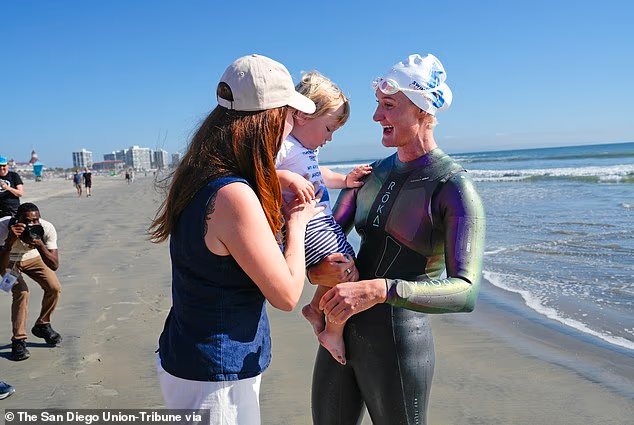
A 33-year-old endurance swimmer has made history by completing an extraordinary 900-mile journey along the entire California coastline. But after spending 111 days in the Pacific Ocean, Catherine Breed says one of the greatest dangers she encountered was not sharks — it was human pollution.
Breed began her ambitious swim on July 1, 2026, entering the water near the California-Oregon border. Her goal was to become the first person to swim the full length of California’s coastline, eventually reaching the border with Mexico.
The journey took more than three months, with Breed swimming approximately 10 miles on many days while being accompanied by a support crew aboard a 52-foot sailboat. The team provided food, accommodation, navigation and safety assistance throughout the expedition.
On October 19, Breed celebrated her achievement with a ceremonial finish at Coronado Beach in San Diego County, after completing the final portion of the journey offshore.
But the final stretch presented an unexpected environmental challenge.
Near the US-Mexico border, the Tijuana River carries large amounts of sewage and other pollution into the Pacific Ocean. The contamination has repeatedly affected beaches in the San Diego region, with some areas facing closures because of unsafe water conditions.
Breed had planned for the pollution long before reaching Southern California. Rather than swim directly through the contaminated coastal waters, she and her team devised a route several miles offshore to avoid the worst of the pollution.
She also said she had begun taking preventive antibiotics under the guidance of her medical team.
Speaking about the experience, Breed described the polluted water as resembling sewage and questioned why people were so preoccupied with sharks while paying less attention to the damage humans were causing to the ocean.
Sharks were certainly part of the expedition’s risks. Her crew constantly watched the surrounding water, and Breed would leave the ocean whenever a shark was spotted. On at least one occasion, the team decided she should stop swimming for the day.
However, she said the shark encounters were generally manageable because the crew was nearby and monitoring the conditions.
The weather proved far more difficult.
Breed’s journey coincided with unusually challenging Pacific conditions associated with a powerful El Niño. Tropical storms, hurricanes, large waves and changing ocean currents repeatedly complicated the team’s plans.
At times, currents appeared to work against her southward progress, forcing the crew to reconsider routes and even swim certain sections in the opposite direction. Waves reportedly reached around seven feet, making some days particularly exhausting.
Despite the obstacles, Breed continued, spending hours in the water each day. She also encountered extraordinary marine life, including dolphins, sea lions, manta rays and whales.
One particularly memorable experience came along California’s Central Coast, where a mother humpback whale and her calf reportedly swam within approximately 15 to 20 feet of her.
Breed’s achievement was not simply a test of physical endurance. She said she wanted to draw attention to ocean conservation and encourage more women and girls to explore the water.
A former competitive swimmer at the University of California, Berkeley, Breed had already completed several demanding open-water challenges, including crossings of the English Channel and the North Channel between Northern Ireland and Scotland.
But the California expedition was on an entirely different scale, requiring months of preparation and a dedicated support team.
After finally reaching shore, Breed described feeling both proud and relieved. She thanked the people who had supported the project and said she hoped the journey would inspire others to pursue ambitious goals while becoming more involved in protecting the ocean.
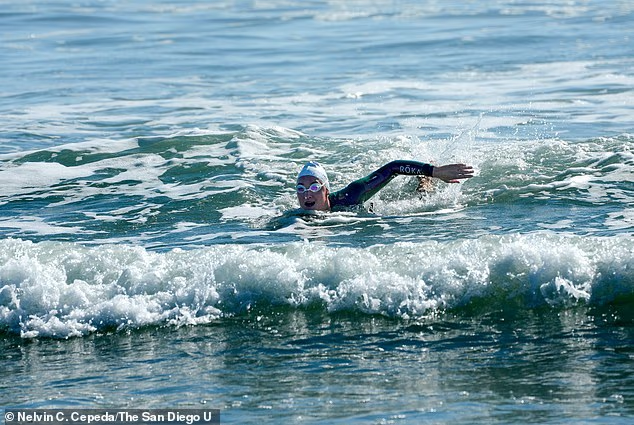
Her 900-mile swim may have ended, but the environmental problem she highlighted remains. For Breed, the greatest warning from the expedition was that the ocean’s threats do not always come from the wildlife living beneath its surface.
Source link: DAILYMAIL