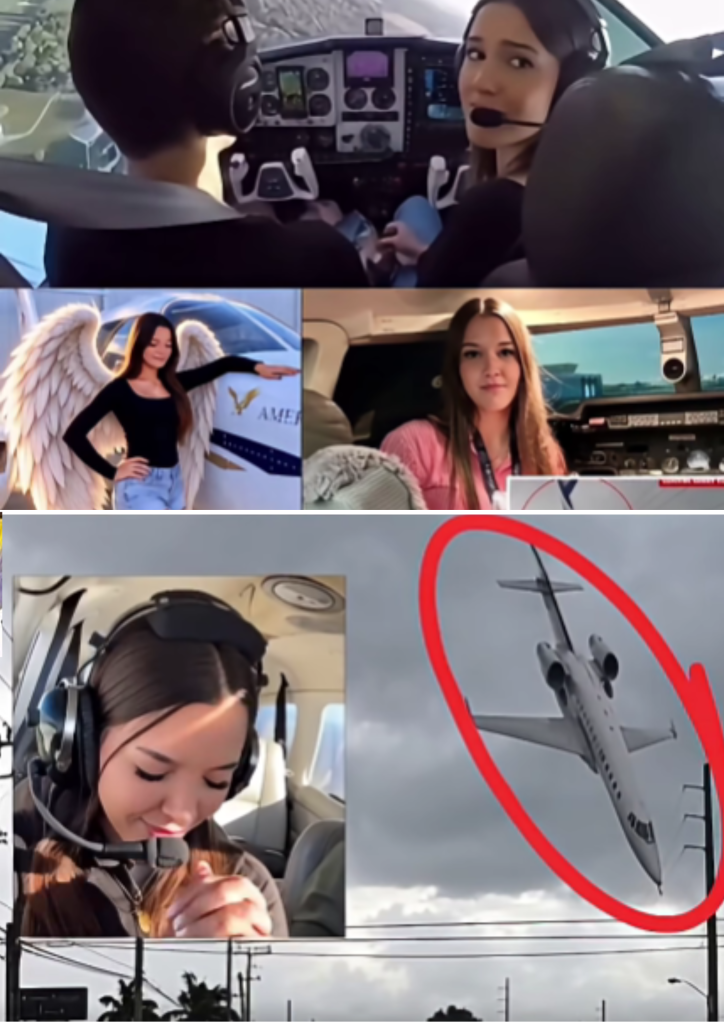
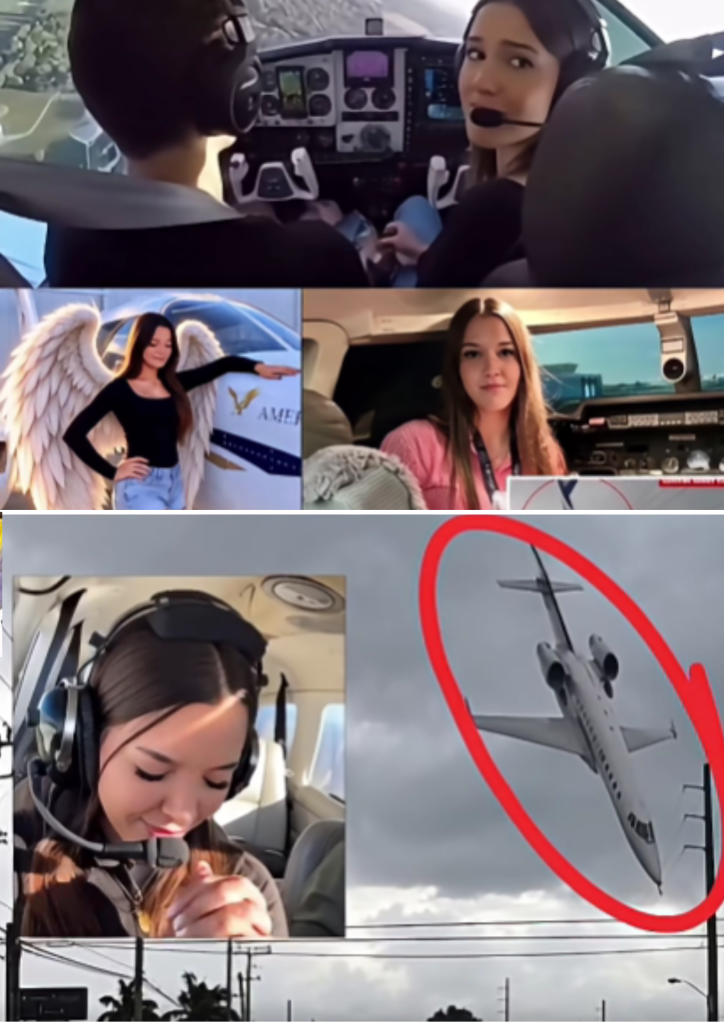
1,300 FLIGHT HOURS AT JUST 20: WHAT NATHALIA FILGUEIRAS’S TRAINING REVEALS ABOUT HER ROLE AS LEARJET 60 CO-PILOT
GREENACRES, FLORIDA — At just 20 years old, Nathalia Gadelha Filgueiras had already accumulated more than 1,300 hours in the air, earned professional pilot credentials and completed specialized training for the Learjet 60.
Following the November 1 𝔠r𝘢sh that killed all nine people aboard the charter aircraft, questions emerged online about whether the young first officer had enough experience to serve in the cockpit of a high-performance business jet.
Her family, instructors and legal representatives have pushed back against those claims, pointing to her flight hours, certifications and aircraft-specific training as evidence of the preparation behind her career.
The details are significant not only because of Filgueiras’s age, but also because they help explain the regulatory distinction between serving as a second-in-command pilot and acting as pilot in command.
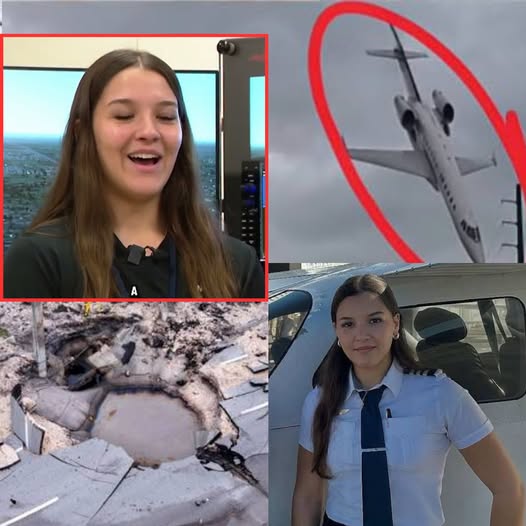 MORE THAN 1,300 HOURS BEFORE HER FINAL FLIGHT
Filgueiras developed an interest in aviation at an early age. Her father, Allan Filgueiras, helped introduce her to flying when she was around 12 years old.
By 17, she had earned her private pilot certificate, beginning a professional journey that eventually led her to commercial aviation.
According to statements from her family and representatives, she had accumulated more than 1,300 flight hours before the fatal accident.
She also held commercial pilot credentials, an instrument rating and Certified Flight Instructor qualifications, according to reports about her aviation record.
Her former instructor, Chris Kirk, publicly praised her abilities and described her as an exceptionally talented student.
Kirk recalled that she completed her Learjet training with fewer than 1,100 flight hours and performed impressively during the examination.
For her family, these achievements are an important part of the story they want remembered: Nathalia was not simply a young woman who happened to find herself in a business jet cockpit. She had spent years working toward a career in aviation.
WHAT FAA PART 135 ACTUALLY REQUIRES OF A SECOND-IN-COMMAND PILOT
The Learjet 60 was operating as a charter flight under Federal Aviation Administration Part 135 regulations.
Under 14 CFR § 135.245, a second-in-command pilot generally must hold at least a commercial pilot certificate with the appropriate aircraft category and class ratings, along with an instrument rating.
For operations conducted under instrument flight rules, additional instrument-experience requirements apply.
Other regulations also address pilot testing, training and aircraft-specific qualifications. In particular, 14 CFR § 61.55 sets out second-in-command requirements, including type-rating provisions for aircraft that require more than one pilot.
These rules are important because the qualifications required of a first officer are not identical to those required of the captain.
A second-in-command pilot does not automatically need to meet every flight-hour threshold or certification requirement imposed on a pilot in command.
The reported figure of more than 1,300 hours is therefore evidence of Filgueiras’s experience, not a minimum flight-hour requirement established by § 135.245.
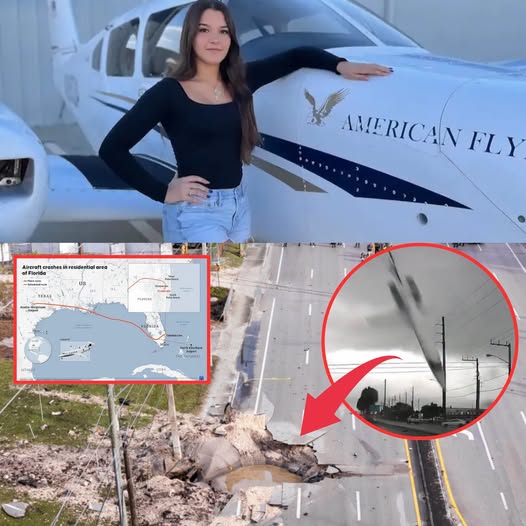 HER LEARJET 60 TRAINING AND TYPE-RATING CHECK
Reports discussing Filgueiras’s FAA certification history and training indicate that she completed specialized Learjet 60 training and a check ride in March 2026.
Her instructor Chris Kirk also described her performance during the Learjet examination as exceptional.
A type rating is an aircraft-specific qualification that authorizes a pilot to serve in a designated role on an aircraft requiring that rating.
The distinction between a pilot-in-command type rating and a second-in-command type rating matters. The exact privileges and limitations shown on a pilot’s certificate determine which role the pilot is authorized to perform.
Her reported training is relevant to understanding her preparation for the flight. However, a complete determination of her regulatory qualifications would require examination of her FAA certification records, training documents and the charter operator’s records.
HER FINAL RADIO CALLS DURING THE FLIGHT
On November 1, the Learjet 60 operated by Aurora Aviation, doing business as Upper Jet, was flying from Austin-Bergstrom International Airport in Texas toward North Eleuthera in the Bahamas.
As the aircraft encountered increasingly difficult weather, the crew reported ice accumulation and moderate turbulence.
Air traffic control communications documented significant altitude changes. Filgueiras reported that the aircraft was being thrown around by turbulence and communicated the developing emergency.
One of her final reported transmissions described an overspeed condition and a descent of approximately 20,000 feet per minute.
All nine people aboard the aircraft died when it crashed near Greenacres, Florida.
Her father later spoke publicly about his daughter’s final moments, remembering her dedication to aviation and defending the professional record she had built.
WHAT THE NTSB HAS FOUND — AND WHAT REMAINS UNKNOWN
The National Transportation Safety Board is continuing its investigation into the 𝔠r𝘢sh.
Investigators recovered portions of both wings, both engines, the flight deck, the vertical and horizontal stabilizers, and sections of the aircraft’s control surfaces.
Particularly significant were pieces of the left elevator recovered as far as 3.8 miles from the 𝔠r𝘢sh site. The discovery indicates that the aircraft broke apart before impact, although investigators have not determined whether the elevator’s separation caused the 𝔠r𝘢sh or resulted from