“32 YEARS HAVE PASSED… BUT CAN JUSTICE EVER HEAL A FATHER’S BROKEN HEART?” — SUSAN SMITH DENIED PAROLE AGAIN AS THE FATHER OF HER TWO m𝑢rdєred SONS SPEAKS OUT
More than three decades have passed since two little boys lost their lives in one of America’s most haunting criminal cases. But for their father, David Smith, the pain has never truly gone away.
On November 19, 2026, Susan Smith appeared before a South Carolina parole board for a second time, hoping to be released from prison after serving 32 years for the murders of her two young sons, Michael and Alex.
Once again, David was there to oppose her release.
And once again, the board made its decision: Susan Smith would remain behind bars.
 THE TWO LITTLE BOYS AMERICA NEVER FORGOT
The tᩚraɢedy began on October 25, 1994, in Union County, South Carolina.
Susan Smith’s sons, three-year-old Michael and 14-month-old Alex, were strapped into their car seats when their mother’s vehicle entered John D. Long Lake.
At first, Smith told authorities that a carjacker had stolen her car with the children still inside. Her emotional public appeals prompted a desperate search that captured national attention.
For nine days, the country hoped the boys would be found alive.
Then the story took a devastating turn.
Smith eventually confessed that she had allowed the car to roll into the lake with her children inside. Their bodies were later recovered from the submerged vehicle.
In 1995, she was convicted of two counts of murder and sentenced to life in prison.
“32 YEARS HASN’T CHANGED THE HEARTACHE”
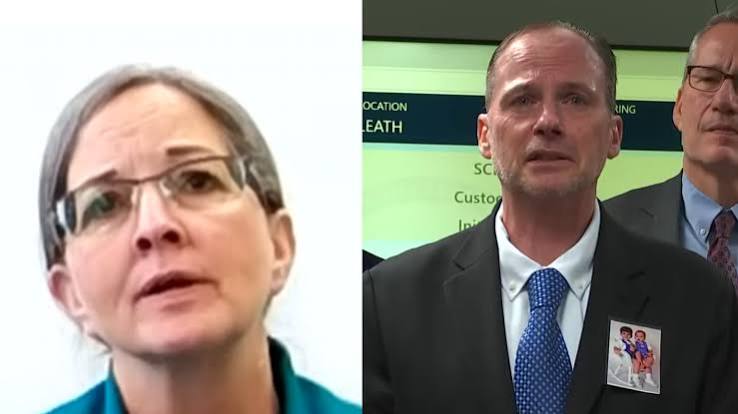
At her November 19 parole hearing, David Smith once again stood before the board to speak for the two sons who could no longer speak for themselves.
He wore photographs of Michael and Alex over his heart — the same images he had carried during the original trial and at the previous parole hearing in 2024.
For David, the passage of time has not made the loss easier to accept.
He reminded the board that 32 years might sound like a lifetime to others, but to him, the tᩚraɢedy still feels painfully close.
He also spoke about the deliberate nature of the crime, making clear that he did not believe his former wife should be given the opportunity to walk free.
His appearance was about more than opposing a prison release. It was also an effort to ensure that Michael and Alex were remembered as two innocent children whose lives were taken far too soon.
 SUSAN SMITH ASKS FOR ANOTHER CHANCE
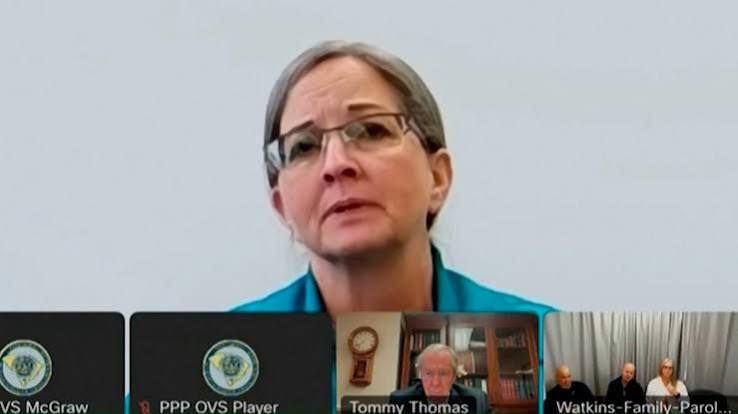
Appearing virtually from prison, Smith, now 55, addressed the parole board and expressed remorse for what she had done.
She acknowledged that Michael and Alex were innocent children who did not deserve to die.
She apologised to David, recognising that he had been denied the chance to watch his sons grow up, ride bicycles or go to school.
Smith told the board that she had changed and matured over the years and asked for an opportunity to leave prison and contribute positively to society.
Her representatives also pointed to her conduct in prison and changes in her mєntal health as reasons to consider release.
But David and others who opposed parole argued that the seriousness of the crime and the permanent devastation inflicted on the family could not be overlooked.
A UNANIMOUS DECISION
After hearing from Smith, her supporters and those opposing her release, the South Carolina parole board voted unanimously to deny her request.
It was the second time she had been refused parole, following the board’s decision in November 2024.
Under the law applicable to her sentence, Smith can apply again in 2028.
For David and the family, however, the decision does not bring back the children they lost. It simply means they will not have to face her release at this time.
A FATHER’S GRIEF THAT TIME CANNOT ERASE
The years have continued to pass. Michael and Alex would now be grown men, with lives and futures that were taken from them before they had the chance to experience the world.
Their father has continued to carry their memory into every parole hearing, determined to make sure their story is not forgotten.
The latest decision may have closed another chapter in Susan Smith’s bid for freedom, but it has not closed the wound left behind in 1994.
For David Smith, justice is not simply a matter of counting the years someone has spent in prison.
It is remembering two little boys, protecting their memory and speaking for them when they can no longer speak for themselves.
Thirty-two years have passed.
But a father’s heartbreak has no timetable.