“OVERWHELMING RELIEF”: JAMES BULGER’S MOTHER DENISE FERGUS SPEAKS OUT AFTER JON VENABLES IS REFUSED RELEASE AGAIN
More than 33 years after the murder of her two-year-old son, Denise Fergus says she can finally breathe a little easier — but warns that the emotional ordeal is far from over.
For more than three decades, Denise Fergus has carried the unimaginable pain of losing her young son, James Bulger, in one of Britain’s most notorious child murder cases.
Now, a fresh decision by the UK Parole Board has brought her a measure of relief.
Jon Venables, one of the two men convicted of murdering James in 1993, will remain behind bars after a parole panel concluded that it was not satisfied he was suitable for release.
Speaking through her representative, Denise described her reaction as one of “overwhelming relief” — a response shaped by years of anxiety over the possibility that one of her son’s killers could return to the community.
But while the decision offers temporary reassurance, it also means Denise and her family may have to face another painful parole process in the future.
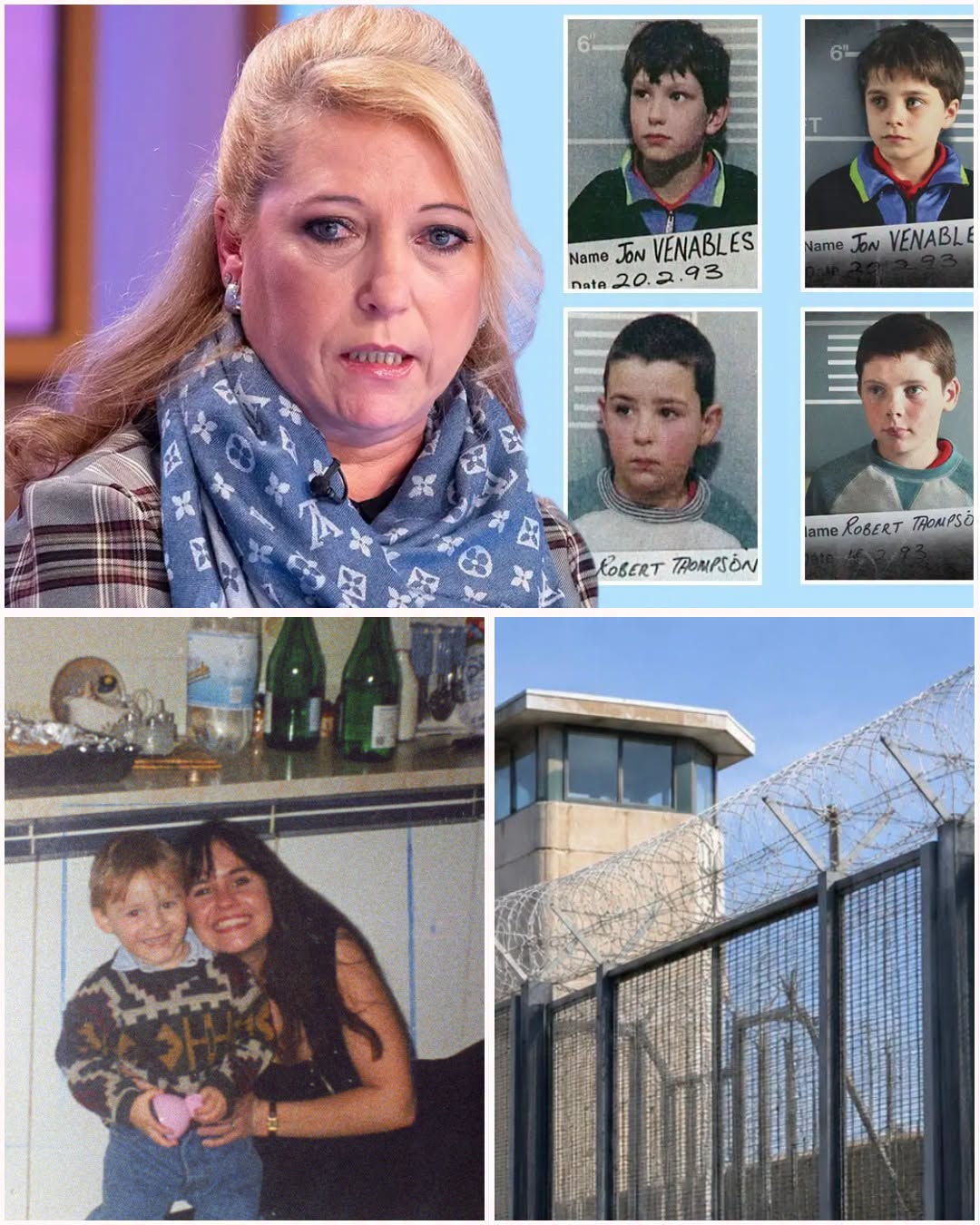 A MOTHER’S RELIEF AFTER YEARS OF UNCERTAINTY
The Parole Board’s decision was published on November 9, 2026, following a review of Venables’ case.
According to the published summary, Venables, now 44, told parole staff at the beginning of the hearing that he accepted he needed to complete further offending-related work in prison and was not seeking release at that stage.
The panel examined evidence from prison and community probation officers, three psychologists and a psychiatrist.
The majority of the professionals who provided evidence considered that he should remain in custody.
The panel ultimately concluded that it was not satisfied he was suitable for release.
Kym Morris, speaking on behalf of Denise, told Sky News that the prospect of Venables being freed had caused her enormous anxiety.
She said Denise welcomed the decision and remained concerned about the safety of other children, particularly in light of Venables’ repeated offending.
For a mother who has spent decades campaigning for her son and seeking answers from the justice system, the ruling represents an important moment — even if it cannot undo the tᩚraɢedy.
 WHY THE PAROLE BOARD DECIDED HE SHOULD REMAIN IN PRISON
The decision was not based solely on the original murder conviction.
The panel also considered Venables’ history of further offending and whether the risks he might present could be safely managed outside prison.
Venables was released on licence in July 2001. In February 2010, he was recalled to prison after indecent images of children were discovered on his computer.
He was released again in August 2013, but was recalled in November 2017 after further indecent images were found.
He later pleaded guilty to offences involving the making of indecent images and possession of a prohibited manual, receiving a 40-month prison sentence in 2018.
In its latest assessment, the Parole Board acknowledged that Venables had completed considerable work in prison to address his offending.
However, the panel remained concerned about continuing issues relating to his 𝘴єxual preoccupation.
It identified potential future risks, including a return to viewing child 𝘴єxual 𝘢bu𝘴e images and the possibility of offences involving direct contact with children.
The panel concluded that further work in custody was necessary and that it could not be satisfied the risks were manageable in the community.
The decision does not mean that another review can never take place. Venables is expected to become eligible for another parole review in approximately two years.
DENISE WANTED THE HEARING TO BE PUBLIC
There was another painful issue surrounding the latest review.
Denise had wanted the parole hearing to take place in public, believing that greater transparency could help families understand the process and reduce the spread of misinformation.
The request was refused in September 2026.
In its published explanation, the Parole Board said a public hearing would have been heavily restricted by legal protections designed to safeguard Venables’ identity and safety.
The Board also raised concerns that a public hearing could affect the quality of evidence given by participants and make it harder for the panel to assess the case fairly.
Although the hearing remained private, arrangements were made for victims to listen to an audio recording after the proceedings, once it had been checked to ensure legal restrictions were respected.
For Denise, however, the decision meant another important opportunity for public scrutiny had been lost.
THE CRIME THAT SHOCKED BRITAIN
James Bulger was just two years old when he was abducted from a shopping centre in Bootle, Merseyside, on February 12, 1993.
He was taken by two 10-year-old boys, Jon Venables and Robert Thompson.
The little boy was later m𝑢rdєred, and his body was discovered on a railway line.
The case horrified the country, not only because of the brutality of the crime but also because of the ages of those responsible.
Venables and Thompson were convicted of murder in November 1993 and sentenced to be detained at Her Majesty’s Pleasure.
Both were eventually released on licence in 2001, under new identities and strict legal protections.
Venables’ subsequent recalls to prison brought renewed attention to the case and repeatedly revived the fear and distress experienced by James’s family.
“THE HARROWING PROCESS” IS NOT OVER
Although Denise has welcomed the latest ruling, her representative made clear that the decision does not remove the distress of knowing another parole review will eventually follow.
She has also called for changes to the parole system so that bereaved families receive stronger support and are better protected from the cumulative emotional impact of repeated reviews.
The family hopes to discuss possible reforms with Justice Secretary Alex Norris, including longer intervals between reviews where legally possible.
The concern is that families should not have to repeatedly prepare themselves to revisit the worst experience of their lives without meaningful consideration of the emotional harm involved.
For Denise, the latest decision brings a moment of breathing space — but not lasting peace.
A MOTHER’S LOVE THAT TIME HAS NEVER ERASED
James would have grown into an adult, experienced school, friendships and all the ordinary milestones that parents hope to share with their children.
Instead, his life was taken when he was only two years old.
More than three decades later, his mother continues to speak about him and fight for the interests of families affected by serious crime.
The latest Parole Board decision means Jon Venables will remain in prison for now.
For Denise Fergus, it is a moment of overwhelming relief