“BANKING 60 DEGREES, DESCENDING 22,000 FEET”: CHILLING FINAL TRANSMISSIONS REVEAL TERRIFYING MOMENTS BEFORE diᩚadℓy FLORIDA PRIVATE JET 𝔠r𝘢sh
A 20-year-old co-pilot’s desperate warnings, reports of extreme turbulence and a rapidly descending aircraft are raising ᑕriᩚtiᩚcal questions about what happened aboard a Learjet 60 moments before it crashed in Palm Beach County, Florida, 𝘬iᩚlling all nine people on board.
The final moments of a private jet flight over South Florida have become the focus of an intensive federal investigation after newly released air traffic control recordings revealed the increasingly desperate messages from its cockpit.
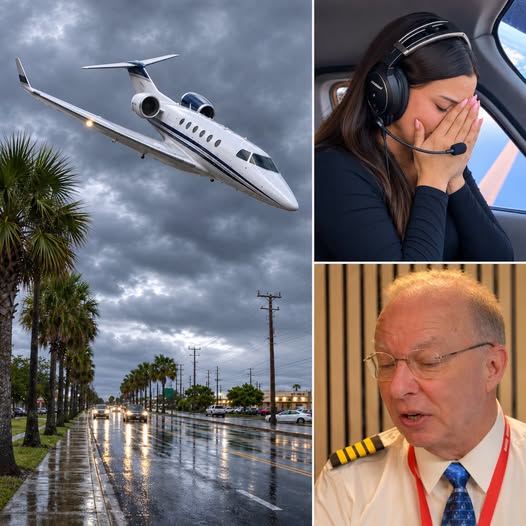
On November 1, 2026, a chartered Learjet 60, registered as N722BD and operated by Aurora Aviation, crashed near Greenacres in Palm Beach County, Florida, during a flight from Austin, Texas, to North Eleuthera in the Bahamas.
The aircraft was carrying seven passengers and two crew members.
Among those killed was 20-year-old co-pilot Nathalia Gadelha Filgueiras, a young aviator who had earned her private pilot’s license at just 17 years old.
The captain was identified as 55-year-old Jeffrey Gregory.
The tᩚraɢedy also claimed the lives of all seven passengers, including Austin couple Adam Robinson and Helen Sharp and their two young children, Emma, 4, and Charlie, 2.
 A ROUTINE FLIGHT SUDDENLY TURNED INTO AN EMERGENCY
According to recordings of communications with Miami Air Route Traffic Control Center, the flight initially appeared relatively routine.
However, shortly before the 𝔠r𝘢sh, the crew began reporting increasingly difficult weather conditions.
Flying at approximately 35,000 feet, the pilots reported light clear icing and moderate turbulence.
The crew also described significant changes in altitude caused by the rough conditions, with the aircraft reportedly moving up and down by hundreds of feet.
As the aircraft encountered precipitation, the pilots requested permission to climb to 37,000 feet in an apparent attempt to find better flying conditions.
Air traffic control approved the request.
But within seconds, the situation deteriorated dramatically.
“WE’RE DESCENDING 10,000 FEET PER MINUTE”
The first emergency transmissions revealed that the aircraft was rapidly losing altitude.
“Mayday, mayday,” Filgueiras told air traffic controllers.
She reported that the jet was descending at approximately 10,000 feet per minute.
Moments later, the situation became even more alarming.
The co-pilot reported an overspeed condition as the aircraft continued plunging downward.
“We are in an overspeed condition descending 20,000 feet per minute,” she transmitted.
She then warned controllers:
“We’re gonna 𝔠r𝘢sh into the ground.”
As the aircraft continued its uncontrolled descent, Filgueiras reported that it was descending at approximately 22,000 feet per minute and banking at a steep 60-degree angle.
In one of the most disturbing moments captured in the recordings, she repeatedly urged the captain to look outside.
“Look outside, Jeff, look outside!”
Her final recorded words included a desperate warning:
“We’re out of time.”
Communications with the aircraft then ended.
 WHAT CAUSED THE JET TO LOSE CONTROL?
The recordings have raised several important questions for aviation investigators.
One of the central issues is whether severe weather, including icing and powerful turbulence, contributed to the aircraft’s sudden loss of control.
Aviation specialists have also examined the possibility of structural failure.
The National Transportation Safety Board (NTSB) reported early indications that the aircraft may have begun breaking apart before striking the ground.
Investigators recovered portions of the aircraft’s left elevator in three separate pieces, with debris discovered between approximately 1.3 and 3.8 miles from the main 𝔠r𝘢sh site.
The elevator is part of the aircraft’s horizontal tail assembly and plays an important role in controlling its pitch.
Damage or separation involving ᑕriᩚtiᩚcal flight-control components could have serious consequences for an aircraft’s ability to remain stable.
Experts have also discussed how severe icing, hail and extreme turbulence inside a powerful thunderstorm could affect an aircraft’s aerodynamic performance and structural integrity.
Another question concerns spatial disorientation, a condition in which pilots can lose an accurate sense of an aircraft’s position or movement, particularly when visual references are limited.
However, investigators have not established that spatial disorientation occurred or determined whether it played any role in this accident.
At this stage, no single explanation has been confirmed.
THE COCKPIT VOICE RECORDER COULD HOLD ᑕriᩚtiᩚcal ANSWERS
A major development came on November 9, when the NTSB announced that investigators had recovered the aircraft’s cockpit voice recorder (CVR) from the impact site.
The recorder was transported to the NTSB Vehicle Recorders Laboratory in Washington, D.C., for examination.
While air traffic control recordings reveal what the co-pilot communicated outside the aircraft, the cockpit voice recorder could provide a much more complete account of what happened inside.
It may help investigators establish:
- What the captain and co-pilot discussed during the emergency.
- Whether either pilot identified a mechanical or structural problem.
- What warnings or alarms sounded inside the cockpit.
- What emergency procedures the crew attempted.
- Whether the pilots recognized a developing loss of control and how they responded.
The recorder’s condition and the completeness of any recoverable information are important factors in the ongoing examination.
A 𝔠r𝘢sh THAT LEFT INVESTIGATORS WITH MORE QUESTIONS
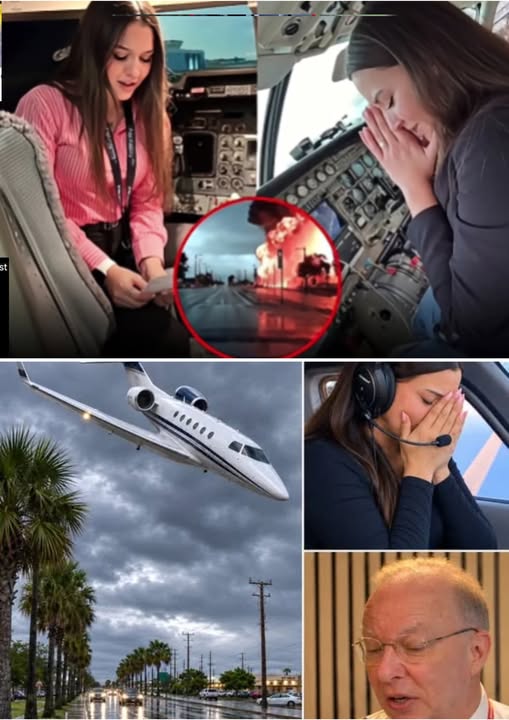
The Learjet ultimately struck Military Trail near a mobile home community in Greenacres, producing a devastating impact and scattering debris across the surrounding area.
The 𝔠r𝘢sh also damaged nearby properties and forced residents to deal with the aftermath of the disaster.
One person on the ground sustained a leg injury.
NTSB investigators have been examining recovered aircraft components, weather conditions, flight data and communications leading up to the accident.
The investigation is particularly focused on understanding why the aircraft entered such an extreme descent and whether structural damage occurred before impact.
THE FINAL ANSWERS HAVE NOT YET BEEN ESTABLISHED
For the families of the nine victims, the recordings offer a heartbreaking glimpse into the final moments of their loved ones.
For investigators, they represent only one part of a much larger puzzle.
The recovered cockpit voice recorder, aircraft wreckage and technical examinations may eventually help explain what happened during those final seconds above Florida.
Until the NTSB completes its investigation, the precise cause of the 𝔠r𝘢sh remains undetermined.
Nine lives were lost in a matter of moments. Now, investigators are working to uncover what happened inside the cockpit before the final transmission disappeared.