“BANKING 60 DEGREES, DESCENDING 22,000 FEET PER MINUTE” — AVIATION EXPERTS EXAMINE TERRIFYING FINAL MOMENTS BEFORE FATAL FLORIDA LEARJET 𝔠r𝘢sh
A chilling final radio transmission. A private jet plunging toward the ground at an astonishing rate. And a young co-pilot desperately trying to communicate with air traffic controllers as the aircraft appeared to spiral out of control.
The November 1, 2026, 𝔠r𝘢sh of a Learjet 60 near Greenacres, Florida, claimed nine lives, including 20-year-old co-pilot Nathalia Gadelha Filgueiras.
Now, publicly released air traffic control recordings and newly recovered cockpit evidence are giving investigators more clues about what happened during the aircraft’s final moments.
Among the most haunting words heard over the radio were reports that the aircraft was banking at 60 degrees while descending at approximately 22,000 feet per minute.
But what caused the jet to lose control?
Aviation specialists are examining several possibilities, including severe weather, spatial disorientation and a potential structural failure. For now, investigators have not established which factors ultimately caused the disaster.
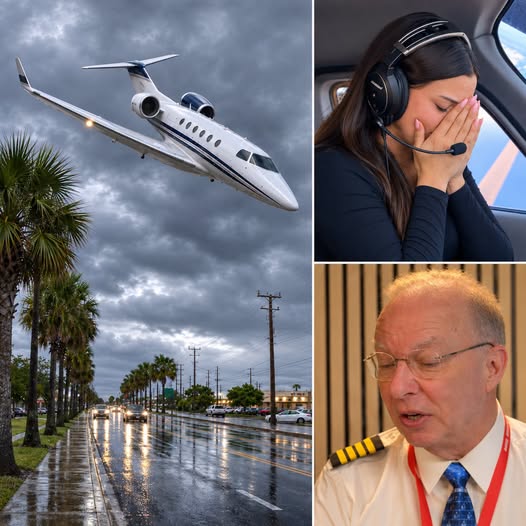 THE FINAL RADIO TRANSMISSIONS
The Learjet 60, registered as N722BD, departed Austin, Texas, bound for North Eleuthera in the Bahamas on November 1.
There were nine people aboard: two pilots and seven passengers.
During the flight, the crew communicated with air traffic controllers about icing and moderate turbulence at approximately 35,000 feet.
The situation initially appeared manageable.
The crew reported encountering precipitation and requested permission to climb to 37,000 feet.
But shortly afterward, the emergency began.
In the released air traffic control recordings, a pilot urgently reported that the aircraft was descending at 10,000 feet per minute.
The situation deteriorated rapidly.
The crew then declared an emergency and reported an overspeed condition, with the descent accelerating to approximately 20,000 feet per minute.
One transmission included the terrifying warning:
“We’re gonna 𝔠r𝘢sh into the ground.”
The controller attempted to reassure the crew and asked what assistance was needed.
Then came another alarming update: the aircraft was descending at approximately 22,000 feet per minute and banking at 60 degrees.
The recording also captures the words:
“Look outside, Jeff, look outside.”
The final exchange ended with the words:
“We’re out of time.”
Air traffic controllers repeatedly attempted to re-establish communication, but the aircraft never responded again.
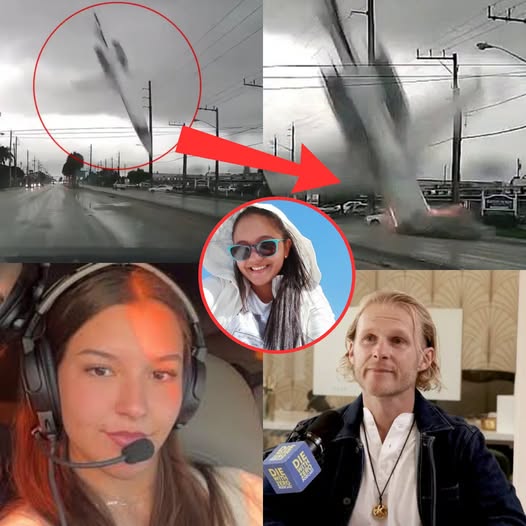
The jet crashed near Military Trail in Palm Beach County, close to a residential mobile home community.
All nine people aboard died.
 TWO POSSIBLE EXPLANATIONS: SPATIAL DISORIENTATION OR STRUCTURAL FAILURE
The extraordinary descent and banking angle have raised serious questions about what was happening inside the cockpit.
Aviation specialists have discussed several possible explanations, but neither spatial disorientation nor structural failure has been confirmed as the cause.
1. Could the pilots have experienced spatial disorientation?
Spatial disorientation occurs when a pilot’s perception of an aircraft’s position or movement does not match its actual orientation.
It can happen in clouds, heavy rain, darkness or other conditions where visual references outside the aircraft are limited.
A pilot may feel that the aircraft is flying straight and level even while it is banking or descending.
The repeated instruction to “look outside” has attracted attention because it could suggest that someone in the cockpit was trying to establish a visual reference.
However, that interpretation remains speculative.
The publicly released air traffic control recording does not reveal everything the pilots could see through the cockpit windows, what their instruments were showing or precisely what was being discussed between them.
It also should not be treated as a complete recording of the cockpit conversation.
2. Could the aircraft have suffered a structural failure?
Another major question concerns the possibility that part of the aircraft’s structure became damaged or separated during the emergency.
NTSB investigators reported recovering portions of the Learjet’s tail assembly, including components of the horizontal stabilizer and left elevator.
Some pieces were discovered far from the main impact site.
The elevator is an important flight-control surface that helps control the aircraft’s pitch — whether its nose moves up or down.
Aviation specialists have suggested that damage or separation involving these components could have made the aircraft extremely difficult, potentially impossible, to control.
However, the discovery of separated components does not by itself establish whether a structural failure happened before the aircraft lost control or whether parts separated during the subsequent descent and impact.
That distinction is one of the central questions investigators must answer.
SEVERE WEATHER AND ICE ARE ALSO UNDER INVESTIGATION
Before the emergency, the crew reported light clear icing and moderate turbulence.
They also communicated about precipitation and requested a higher cruising altitude.
Weather conditions are therefore a significant part of the investigation.
Ice accumulation can alter airflow over an aircraft’s wings and control surfaces, potentially reducing lift and increasing drag.
Severe turbulence associated with thunderstorms can also place substantial stress on an aircraft.
An early analysis released by the Aircraft Owners and Pilots Association highlighted the importance of examining weather, aircraft performance, operating limitations, aircraft systems and crew decisions.
Aviation experts have also questioned whether the aircraft encountered conditions that overwhelmed its ability to maintain controlled flight.
But investigators have not yet determined exactly how much weather contributed to the 𝔠r𝘢sh.
THE COCKPIT VOICE RECORDER HAS BEEN RECOVERED
One of the most important developments came on November 9, when the National Transportation Safety Board confirmed that investigators had recovered the aircraft’s cockpit voice recorder.
The device was located at the initial impact site and taken to the NTSB’s Vehicle Recorders Laboratory in Washington, D.C., for evaluation.
Unlike air traffic control recordings, which capture communications transmitted between the aircraft and controllers, a cockpit voice recorder can provide insight into conversations and sounds inside the flight deck.
It may help investigators establish what the pilots were discussing, whether they recognized a developing mechanical problem, what warnings they received and what actions they attempted.
However, investigators have not yet released a complete account of what the recorder contains.
The findings could prove crucial in reconstructing the final minutes of the flight.
NATHALIA GADELHA FILGUEIRAS: A YOUNG PILOT WHO PURSUED HER DREAM
Among the nine victims was Nathalia Gadelha Filgueiras, a 20-year-old pilot whose aviation journey began remarkably early.
She earned her pilot’s license at just 17 years old, before receiving her driver’s license.
Her father, Allan Filgueiras, helped teach her to fly, and the two shared a deep passion for aviation.
In the years before the 𝔠r𝘢sh, Nathalia had spoken about how much she loved flying.
Her father later described the pain of listening to the final air traffic control recordings and trying to understand how the tᩚraɢedy had happened.
Friends also remembered her determination and the dedication she had shown to pursuing a career in aviation.
Her dєatᩚh has prompted renewed attention to the nine lives lost aboard the aircraft and the unanswered questions surrounding the disaster.
NINE LIVES LOST — AND QUESTIONS THAT REMAIN
The 𝔠r𝘢sh devastated families and left residents near the impact site facing the aftermath of a catastrophic aircraft accident.
The passengers included Adam Robinson and Helen Sharp, their two young children, Emma and Charlie, as well as Rachael Reed, Charmi Fehr and Anita Maria Cetina.
Investigators have been examining the aircraft wreckage, flight data, weather conditions, maintenance history and crew communications.
The recovered cockpit voice recorder may provide another important piece of evidence.
For now, no single explanation has been officially established.
Was the crew fighting a loss of control caused by severe weather and icing? Did spatial disorientation play a role? Or did a structural failure leave the aircraft impossible to recover?
Those questions remain unanswered.
Until the NTSB completes its investigation, the final cause of the Florida Learjet 𝔠r𝘢sh remains unknown.