“TENDER-HEARTED JUDGES” SPARK FRESH CONTROVERSY IN LUCY LETBY CASE AS TOP BARRISTER CHALLENGES WITNESS ANONYMITY
Geoffrey Robertson KC argues that medical professionals who testify in high-profile criminal trials should generally be publicly accountable. His comments have reignited debate over open justice, witness protection and public confidence in one of Britain’s most controversial criminal cases.
A fresh legal controversy has erupted around the Lucy Letby case after leading human rights barrister Geoffrey Robertson KC criticised judges for granting lifetime anonymity to medical professionals who testified during the former neonatal nurse’s trial.
Robertson’s remarks, reported by The Sun in September 2026, have intensified an already heated debate over whether the public’s right to scrutinise evidence should take precedence over witnesses’ concerns about harassment, personal distress and unwanted attention.
At the heart of the dispute is a fundamental question: when professional witnesses give evidence in a case of extraordinary public importance, how much of their identity should remain hidden from public view?
 A BARRISTER’S STRONG WORDS ABOUT OPEN JUSTICE
Robertson sharply criticised the decision to grant anonymity to some of the medical professionals who testified against Letby.
“The open justice principle is fundamental to all trials,” he said, arguing that professional witnesses should ordinarily be identified and expected to explain their evidence publicly.
He described some judges as “tender-hearted” and argued that they could be too easily persuaded by lawyers’ concerns about the consequences of identifying witnesses.
His comments reflect a wider legal debate about transparency in criminal proceedings. Supporters of open justice argue that identifying witnesses allows the public and journalists to scrutinise professional testimony, assess potential conflicts of interest and better understand how a verdict was reached.
However, the controversy does not establish that the witnesses gave false evidence or that the court’s decision was improper. Those are separate questions requiring evidence, not assumptions based on anonymity alone.
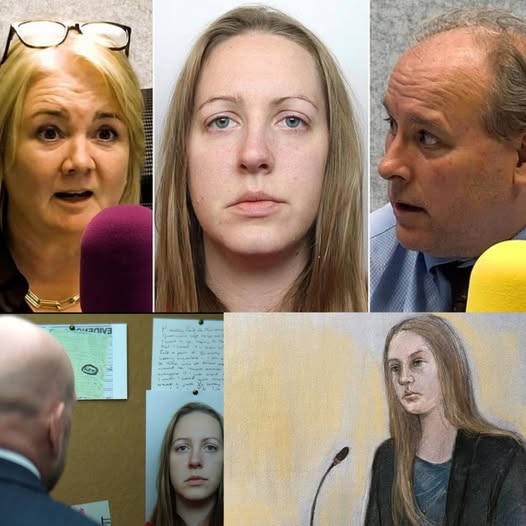 WHY WERE NINE MEDICAL WITNESSES GRANTED ANONYMITY?
During Letby’s criminal proceedings, nine doctors and nurses who worked at the Countess of Chester Hospital were granted protection against public identification.
According to reporting by The Sun and a legal analysis published in The Law Gazette, the witnesses raised concerns that being identified could cause significant distress, expose them and their families to unwanted attention, or affect their ability to give evidence.
The court granted lifetime anonymity orders under provisions of the Youth Justice and Criminal Evidence Act 1999.
Such orders are not the same as a finding that witnesses should never be scrutinised. They restrict the publication of identifying information, while questions about their evidence can still be examined through the legal process.
Nevertheless, critics say lifetime restrictions deserve particularly careful consideration because they can limit public scrutiny long after a trial has concluded.
The opposing concern is equally important: if witnesses reasonably fear harassment, threats or severe personal consequences, they may be reluctant to come forward or provide evidence freely.
The debate therefore centres on how courts should balance transparency with the protection of individuals involved in highly publicised proceedings.
HOW ANONYMITY BECAME PART OF THE WIDER LETBY DEBATE
Lucy Letby, a former neonatal nurse at the Countess of Chester Hospital, was convicted of murdering seven babies and attempting to murder seven others. She received a whole-life sentence in August 2023.
The case attracted extraordinary public attention, and restrictions on identifying certain babies, their families and medical staff shaped how journalists could report the proceedings.
In September 2026, The Sun reported that concerns about witness anonymity had grown alongside renewed public debate over Letby’s convictions. Media specialist Martin Soames argued that anonymity could make it harder for the public to understand who was giving evidence and could create suspicion that professionals were not being held accountable.
Other commentators have raised concerns about the broader use of anonymity orders across the justice system. But figures reported in the media cover different types of proceedings and should not be interpreted as proof that all such orders are unjustified.
A KEY DISTINCTION: TRANSPARENCY DOES NOT AUTOMATICALLY MEAN WRONGDOING
The arguments surrounding the Letby case have sometimes become entangled with wider claims about institutional failures and the reliability of the convictions.
Those issues must be considered separately.
The Thirlwall Inquiry, which examined the circumstances surrounding events at the hospital and the responses of NHS staff and management, published its report on September 15, 2026. The inquiry identified serious failures in the protection of babies and in hospital management.
However, its remit was not to determine Letby’s criminal guilt or overturn her convictions.
Separately, the Criminal Cases Review Commission confirmed in February 2026 that its review of Letby’s application was ongoing. The commission examines whether a case may warrant referral to an appeal court; it does not itself decide whether someone is guilty or innocent.
These distinctions matter. Criticism of anonymity rules, findings of institutional failings and arguments about the safety of a criminal conviction are related areas of public discussion, but one does not automatically prove the other.
THE QUESTION THAT CONTINUES TO DIVIDE LEGAL EXPERTS
The controversy extends far beyond one trial.
For advocates of open justice, public identification of professional witnesses can strengthen confidence in the legal system by allowing their backgrounds, expertise and evidence to be scrutinised.
For those who support carefully limited anonymity, protecting witnesses from intimidation and online harassment is essential to ensuring that people can participate in the justice system without unreasonable personal risk.
The challenge for judges is to assess each application on its own circumstances, rather than treating anonymity as either an automatic right or something that should never be granted.
Robertson’s criticism has put that balance back under the spotlight.
Ultimately, the public has a legitimate interest in understanding how major criminal cases are decided. But meaningful scrutiny depends on examining the available evidence, legal rulings and documented findings—not treating secrecy alone as proof of a cover-up.
As debate over the Letby case continues, the question remains: how can the justice system protect vulnerable witnesses while ensuring that decisions made in the public’s name remain open to meaningful scrutiny?