THE ICEBERG DIVE: MOLLY CARLSON’S HISTORIC JUMP INTO FREEZING WATERS
On June 11, 2026, off the coast of Twillingate, Newfoundland, a 28-year-old world-class diver stepped onto a massive iceberg rising above the icy North Atlantic. Standing roughly 15 metres high—equivalent to a five-storey building—with no safety rails or platform, Molly Carlson made history by becoming the first woman ever to dive off an iceberg.
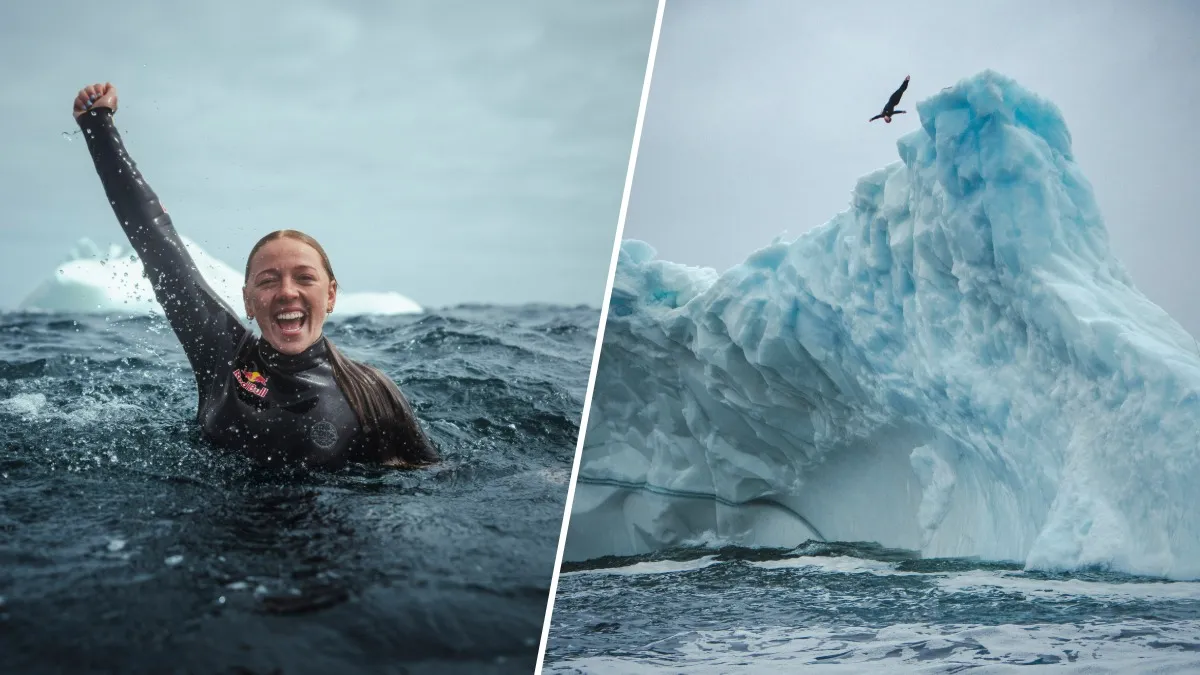
Executing a daring backward dive into water sitting at just 1°C, Carlson pushed the boundaries of extreme sports. However, achieving this feat required six months of grueling training. Unfamiliar with ice climbing, she trained under legendary Canadian climber Will Gadd, progressing from a 10-metre wall to a steep 20-metre ice face. She also tested specialized wetsuits and adapted to freezing water conditions—a rare preparation for cliff divers, who usually wear basic swimwear.
Locating a suitable iceberg posed the ultimate challenge. Her team spent days searching Newfoundland’s coast for an ice formation that was sufficiently tall, stable, climbable, and surrounded by deep water. Because drones could only estimate its exact height, Carlson had to rely entirely on her instincts before leaping into the ocean. She later described the experience as the absolute scariest moment of her life.
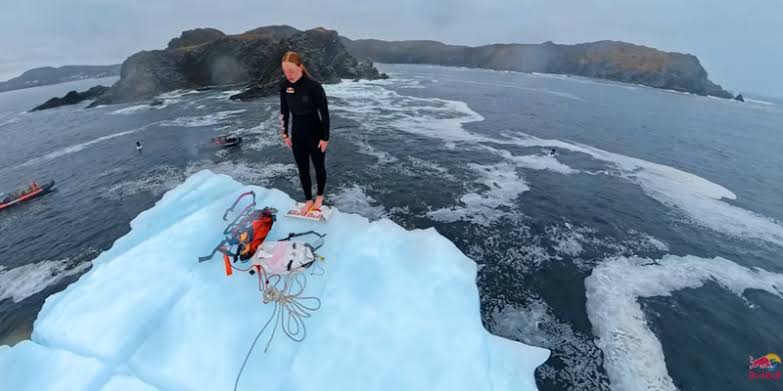
Inspired by Colombian diver Orlando Duque, who accomplished a similar stunt in Antarctica in 2018, Carlson proved that courage can conquer extreme fear. Nevertheless, officials and safety experts, including the Canadian Coast Guard, strongly urge the public not to attempt such dangerous stunts, as this mission involved professional guides, strict logistics, and a full rescue team.