MADELEINE McCANN SUSPECT CHRISTIAN BRUECKNER NO LONGER SUBJECT TO 24-HOUR POLICE SURVEILLANCE AFTER COURT RULING
A German court has ruled that the convicted 𝘴єx offender is no longer considered high-risk enough to justify constant police observation. However, he will remain under electronic monitoring as questions surrounding Madeleine McCann’s disappearance remain unanswered.
A major development has emerged in the long-running disappearance of Madeleine McCann after a German court ruled that Christian Brueckner will no longer be subjected to round-the-clock police surveillance.
The decision, announced on Friday, October 30, 2026, means that officers who have been following the 49-year-old continuously since his release from prison will have to end the operation.
Brueckner remains one of the central figures in the investigation into the disappearance of Madeleine, the British girl who vanished from her family’s holiday apartment in Praia da Luz, Portugal, in May 2007.
However, the court’s decision does not mean he has been cleared in connection with Madeleine’s disappearance.
He has never been charged in that case and continues to deny any involvement.
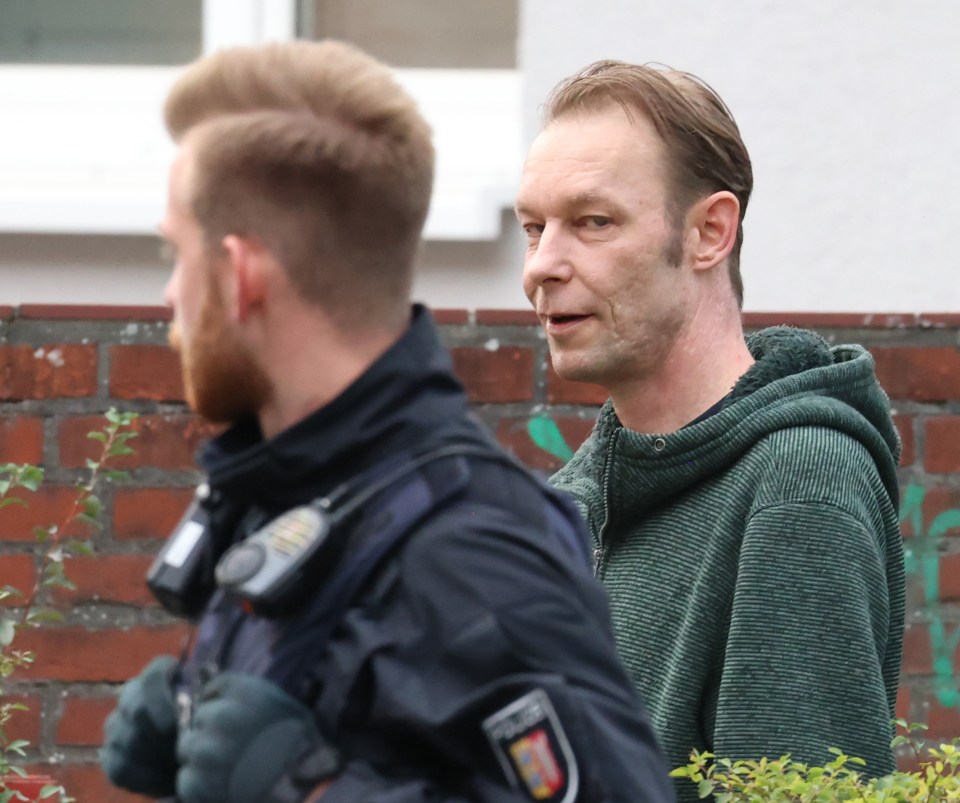 WHY HAS THE COURT ENDED THE CONSTANT SURVEILLANCE?
According to German broadcaster ITV News, the Schleswig-Holstein Higher Regional Court rejected a police appeal seeking to extend the continuous monitoring.
The ruling followed a new psychological and psychiatric assessment of Brueckner.
The latest expert report reportedly assessed his risk of reoffending as average rather than high.
Judges concluded that the legal requirements for maintaining round-the-clock police surveillance were no longer met.
The court also considered whether the constant monitoring was undermining efforts at rehabilitation.
Brueckner’s lawyer, Philipp Marquort, welcomed the decision, arguing that his client should be allowed to rebuild his life after serving his prison sentence.
He said two judicial instances had now reached the same conclusion that the legal requirements for continuous surveillance were not satisfied.
 HE WILL STILL BE TRACKED ELECTRONICALLY
Although the continuous police operation is ending, Brueckner will not be completely free of monitoring measures.
He will continue wearing an electronic ankle tag and must comply with other restrictions imposed by the authorities.
His lawyer has said that the existing measures prevent his client from leaving Germany.
German police have also indicated that they will continue monitoring him within the limits of the law.
Authorities have emphasized that public safety remains a priority.
The distinction is significant: officers will no longer be required to follow his every movement in person, but electronic monitoring and other legal supervision measures remain in place.
WHY WAS HE BEING WATCHED AROUND THE CLOCK?
Brueckner was released from prison in September 2025 after serving a seven-year sentence for raping a 72-year-old American woman in Portugal in 2005.
Following his release, German authorities maintained continuous surveillance, citing concerns about public safety and the potential risk of further offences.
The monitoring was also intended to protect him from possible attacks by members of the public because of his connection to the Madeleine McCann investigation.
His surveillance arrangements became the subject of legal proceedings after his lawyers challenged the continued restrictions.
An earlier court assessment had allowed the monitoring to continue, but the latest expert report led to a different conclusion.
HIS CONNECTION TO THE MADELEINE McCANN CASE
Madeleine McCann disappeared on May 3, 2007, while on holiday with her family in Praia da Luz, Portugal.
She was just three years old.
Her parents, Kate and Gerry McCann, were dining with friends at a nearby restaurant while Madeleine and her younger twin siblings were asleep in the family’s holiday apartment.
When Kate returned to check on the children, Madeleine was missing.
Despite extensive searches and international investigations, her whereabouts have never been established.
In June 2020, German prosecutors publicly identified Brueckner as their prime suspect in the disappearance.
Portuguese authorities subsequently made him a formal suspect in 2022.
Investigators have pointed to evidence they believe connects him to the case, including telephone data placing a phone registered to him in the area on the evening Madeleine disappeared.
Brueckner has acknowledged being near the holiday apartment that night but has denied involvement in Madeleine’s disappearance.
He has never been charged with any offence relating to her disappearance.
A SEPARATE COURT CASE DID NOT RESULT IN A CONVICTION
In October 2024, Brueckner was acquitted by a German court of several unrelated charges involving 𝘴єxual offences.
The case concerned allegations dating from 2000 to 2017.
That acquittal was separate from the Madeleine McCann investigation and did not amount to a ruling on his possible involvement in her disappearance.
He remains a convicted 𝘴єx offender because of the separate 2005 rαp̰̃є case in Portugal.
THE McCANN FAMILY STILL HAVE NO ANSWERS
Nearly two decades after Madeleine vanished, the case remains unresolved.
The latest German court ruling has changed the way Brueckner will be monitored, but it has not answered the central question of what happened to the little girl.
There has been no announcement that the investigation into Madeleine’s disappearance has been closed.
For her family, the search for answers continues.
And although the decision has attracted considerable attention, investigators have yet to bring charges against anyone in connection with Madeleine’s disappearance.
The end of round-the-clock surveillance marks a significant legal development in Germany, but it does not bring the long-running investigation any closer to a publicly confirmed resolution.