Australians Flock to Bali for ‘Pain-Free’ Tattoos as Doctors Warn the Trend Could Turn diᩚadℓy
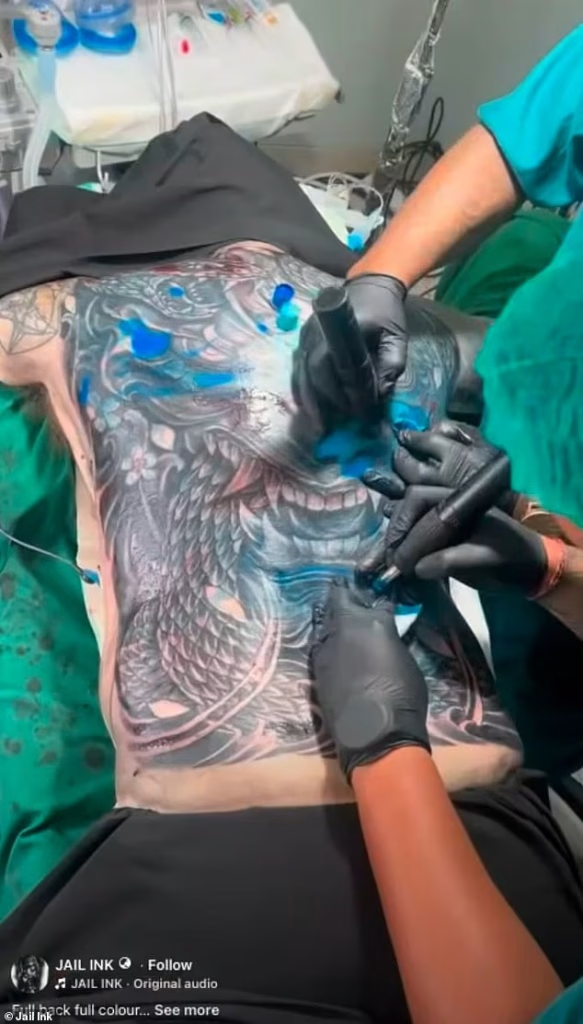
A growing number of Australians are travelling to Bali for an unusual tattoo experience that promises to eliminate the pain of hours-long sessions. But medical experts are warning that the increasingly popular procedure could expose customers to potentially life-threatening complications.
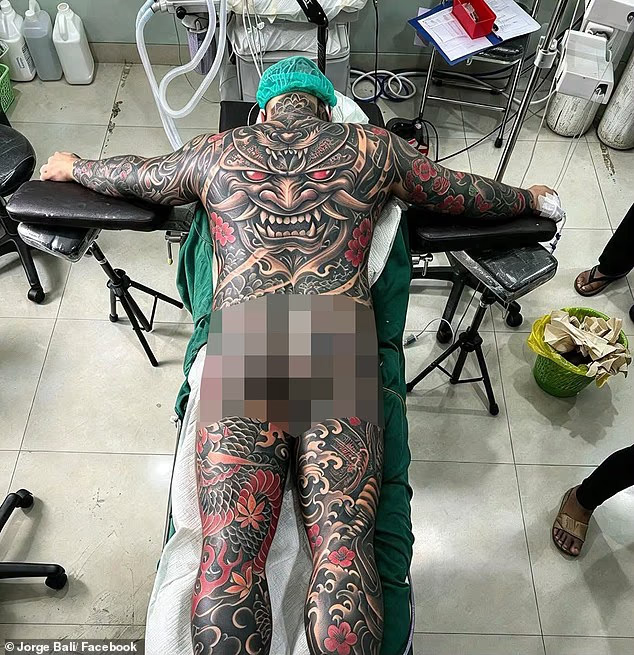
The trend involves undergoing general anaesthesia while multiple tattoo artists work on different parts of the body simultaneously. In some cases, as many as nine artists can work on one person at the same time, allowing enormous tattoos to be completed in just one or two sessions.
Tattoo studios in tourist areas such as Kuta and Legian have reportedly attracted thousands of Australians seeking the experience. A full-body tattoo that could take months or even years to complete in Australia may be finished in approximately 20 hours in Bali.
One studio, Madhe Ink, has described how customers undergo medical checks before being considered for the procedure. The anaesthesia is reportedly administered in a hospital operating room with doctors and nurses present, rather than inside the tattoo studio.
However, Australian doctors say the promise of a pain-free tattoo should not overshadow the risks of being placed under general anaesthesia for an extended period.
Dr Kyle Hoath of the Australian Medical Association warned that general anaesthesia is a serious medical procedure requiring specialist supervision. Patients must be monitored continuously while unconscious, with medical staff responsible for maintaining their breathing and responding to complications.
He described undergoing anaesthesia simply for convenience as a dangerous proposition, questioning why someone would accept such risks for a cosmetic procedure.
The financial appeal is another factor driving the trend. A full-body tattoo under anaesthesia in Bali can cost around AU$16,000, while comparable work in Australian studios may cost tens of thousands of dollars and require numerous appointments.
Some customers have defended their decision, saying they completed extensive tattoo work without experiencing significant complications. Brisbane man Anthony Waud, for example, reportedly spent around AU$9,000 on a nine-hour procedure in Bali.
But a successful experience does not guarantee that every patient will be safe. Medical experts warn that general anaesthesia can cause serious complications, including rare events that may be fatal. The quality of medical facilities, equipment and emergency care also matters.
One American customer was reportedly turned away from a planned procedure after medical checks revealed an irregular heartbeat, illustrating why screening is essential before anaesthesia.
The controversy has prompted renewed questions about medical tourism and whether customers fully understand the risks involved when travelling overseas for procedures that are not routinely offered in their home countries.
For Australians considering the trend, doctors say the promise of avoiding tattoo pain should never be confused with a risk-free experience. A tattoo may be permanent, but the consequences of a serious anaesthetic complication can be far more devastating.
Source: DAILYMAIL