New York Mom Wins Legal Fight to Have a Baby With Frozen Embryo — But Her Ex-Husband Is Now Fighting Over the Last One

A New York woman who recently became a mother through IVF after a bitter legal battle with her estranged husband is facing another courtroom fight over the couple’s final frozen embryo.
Erin Millender gave birth to a baby girl in September 2026 after a Brooklyn judge ruled in her favor in a dispute over two embryos she had created with her then-husband, Adam Rubin. But the legal battle is far from over: Rubin appealed the decision, and a New York appellate court has now sent the dispute back to the lower court for further proceedings.
The couple’s fertility journey began in 2021, when they turned to in-vitro fertilization in the hope of starting a family. Their relationship later deteriorated, and by 2023 they were moving toward divorce.
The disagreement became particularly painful because the couple had different views about what should happen to the embryos they had created together.
Millender wanted to use them to become a mother. Rubin opposed the idea of having a child with his former partner after their marriage had broken down.
He said he withdrew his consent to the embryo transfer in June 2023, after telling Millender to seek legal counsel about a divorce.
The dispute then turned on paperwork the couple had signed at NYU Langone Fertility Center.
One agreement, signed in 2021, stated that the embryos should be donated for research if the couple divorced or legally separated. A later agreement, signed in March 2023, provided that embryos would be transferred to whichever partner was designated in a divorce settlement or another binding agreement.
In December 2025, Brooklyn Supreme Court Justice Theresa Ciccotto ruled in Millender’s favor, granting her exclusive possession and use of the two embryos. The judge’s decision considered her limited remaining opportunity to have a biological child and the circumstances surrounding the agreements.
Millender said doctors had told her the embryos represented her only realistic chance of becoming a biological mother.
While Rubin challenged the ruling, Millender proceeded with treatment using one of the embryos. She became pregnant and gave birth to a daughter in September 2026.
Rubin later described his reaction to learning about the pregnancy in an interview with ABC News. He said he initially thought Millender might have met someone else, before realizing that she had used one of their frozen embryos.
He said the realization was difficult to describe and expressed concern that he had lost control over the use of his genetic material.
The legal dispute took another turn on October 7, 2026, when New York’s Appellate Division, Second Department, issued its decision in the case.
The appeals court did not simply uphold the lower court’s ruling. Instead, it found that the available evidence was insufficient to determine which agreements governed the two embryos in dispute.
The judges noted that the couple had undergone multiple IVF cycles and that the documents submitted to the court did not establish exactly when the two remaining embryos had been created. An agreement relating to one of the relevant 2021 treatment cycles had also not been submitted.
As a result, the appellate court modified the lower court’s order and sent the matter back for further proceedings rather than definitively awarding either party control of the embryos.
That leaves the couple facing another legal battle over the final embryo.
Millender has said she hopes to have a second child using it, even though she recognizes the challenges of becoming a single mother of two after turning 50.
“I still feel incredibly bonded to both of those lives,” she told ABC News, explaining that she had always hoped to give both embryos a chance.
Rubin, however, does not want the remaining embryo used to create another pregnancy. He has said he believes it should instead be donated to scientific research.
Their divorce proceedings are still ongoing, meaning the disagreement over the embryo is unfolding alongside the broader end of their marriage.
The case has also attracted attention because it raises difficult questions about reproductive rights, consent and the legal status of frozen embryos. It highlights how agreements signed during fertility treatment can become central when couples separate and disagree about whether embryos should be used, donated or preserved.
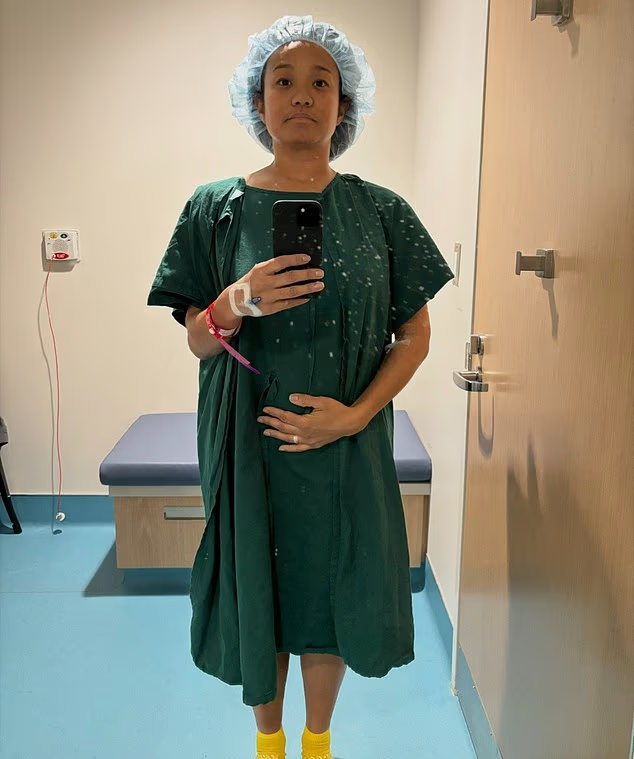
For Millender, the first embryo has already resulted in the birth of the daughter she had long hoped for. But whether she will be allowed to use the last remaining embryo to have another child is now back in the hands of the courts.
Source link: DAILYMAIL