“LOOK OUTSIDE, JEFF!”: CHILLING FINAL RADIO CALLS REVEAL TERRIFYING MOMENTS BEFORE LEARJET PLUNGED 22,000 FEET IN FLORIDA 𝔠r𝘢sh – INVESTIGATORS EXAMINE POSSIBLE STRUCTURAL FAILURE
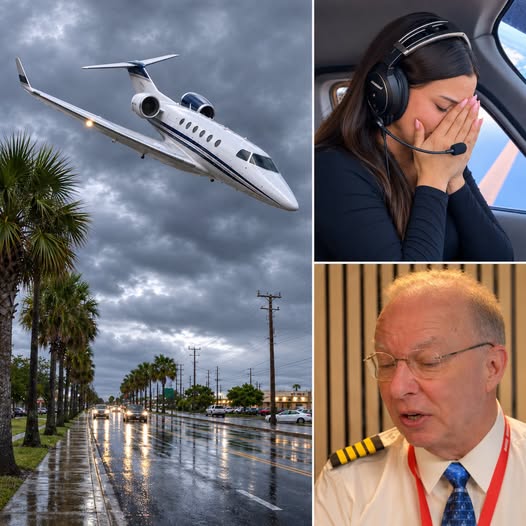
A young co-pilot’s desperate final radio calls have shed new light on the catastrophic moments before a private Learjet 60 crashed in Palm Beach County, Florida, 𝘬iᩚlling all nine people aboard. As investigators examine evidence of possible structural failure, aviation specialists are also considering how extreme weather and spatial disorientation may have contributed to the disaster.
The final moments of a diᩚadℓy private jet 𝔠r𝘢sh in South Florida have raised troubling questions about what happened inside the cockpit as the aircraft suddenly plunged toward the ground.
On November 1, 2026, a Learjet 60 registered as N722BD crashed near West Palm Beach, Florida, 𝘬iᩚlling all nine people aboard, including 20-year-old co-pilot Nathalia Gadelha Filgueiras and 55-year-old captain Jeffrey Gregory.
The aircraft was traveling from Austin, Texas, to North Eleuthera in the Bahamas when it encountered severe weather over South Florida.
Publicly available air traffic control recordings have since revealed a frightening sequence of emergency communications, with Filgueiras repeatedly reporting the aircraft’s rapidly deteriorating condition.
Among the most haunting moments was her desperate instruction to the captain:
“Look outside, Jeff, look outside.”
The recording cuts off shortly afterward.
Investigators are now examining the aircraft’s recovered components, flight data, weather conditions and cockpit voice recorder to establish what caused the jet to lose control.
 A ROUTINE FLIGHT TURNED INTO A NIGHTMARE
The Learjet 60 departed Austin-Bergstrom International Airport in Texas on the afternoon of November 1, bound for North Eleuthera in the Bahamas.
There were nine people aboard: two pilots and seven passengers.
As the aircraft approached South Florida, the crew began reporting increasingly difficult weather conditions to Miami Air Route Traffic Control Center.
The pilots described moderate turbulence and light, clear ice forming on the aircraft.
They also reported significant changes in altitude caused by turbulence, with the aircraft reportedly moving up and down by approximately 700 feet.
At one point, the crew asked air traffic controllers whether smoother conditions were available ahead.
The aircraft subsequently encountered precipitation, and the pilots requested permission to climb to 37,000 feet in search of better conditions.
Air traffic control approved the request.
But the situation deteriorated dramatically within moments.
 THE FINAL RADIO TRANSMISSIONS: A TERRIFYING DESCENT
The publicly available recordings reveal how quickly the emergency unfolded.
Shortly after receiving clearance to climb, the crew reported that the aircraft was descending rapidly.
Filgueiras transmitted an urgent Mayday call, reporting that the jet was descending at approximately 10,000 feet per minute.
Seconds later, she reported an even more alarming situation.
The aircraft was in an overspeed condition and descending at approximately 20,000 feet per minute.
The controller attempted to maintain communication, reassuring the crew:
“I’m here with you, talk to me.”
But the situation continued to deteriorate.
In another transmission, Filgueiras warned that the aircraft was heading toward the ground.
She then reported a descent of 22,000 feet and a bank angle of approximately 60 degrees.
The exact meaning of the 22,000-foot figure in that particular transmission has been discussed, as it may refer to the reported descent rate rather than the aircraft’s altitude.
The most distressing part of the recording came when Filgueiras urgently told the captain to look outside.
Her final words included a warning that they were running out of time.
Air traffic controllers repeatedly attempted to contact the aircraft after the transmission ended, but no further response was received.
WHAT DOES “BANKING 60 DEGREES” REVEAL?
One of the most significant details in the recording is the reported 60-degree bank.
In normal flight, an aircraft’s wings are positioned to maintain controlled flight. A steep bank requires substantial aerodynamic forces and careful management by the pilots.
During an emergency involving severe turbulence, icing or rapidly changing aircraft performance, maintaining control can become extremely difficult.
Aviation specialists have discussed several possible explanations for the aircraft’s unusual flight path.
One possibility is spatial disorientation, a condition in which pilots receive misleading sensory information about an aircraft’s position and movement.
This can become particularly dangerous when flying through clouds, heavy precipitation or darkness, when the natural horizon is difficult or impossible to see.
The human inner ear can create misleading sensations of turning, climbing or descending, even when those sensations do not accurately reflect the aircraft’s actual movement.
However, spatial disorientation has not been established as the cause of this accident.
Another possibility being examined is a serious aircraft control or structural problem.
Investigators must determine whether the aircraft experienced a mechanical malfunction, damage to ᑕriᩚtiᩚcal flight-control components or a combination of factors.
At this stage, neither explanation should be treated as a confirmed finding.
EVIDENCE OF POSSIBLE STRUCTURAL FAILURE
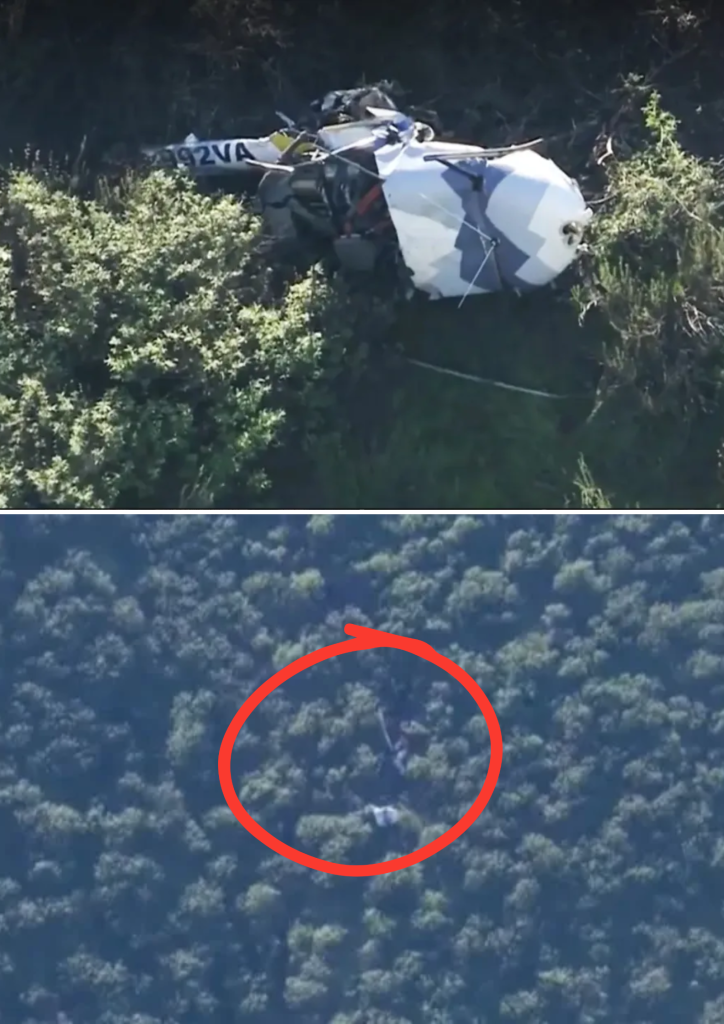
One of the most important developments in the investigation came when investigators recovered aircraft components scattered away from the main impact site.
The National Transportation Safety Board (NTSB) reported that the aircraft’s left horizontal stabilizer elevator had been found in three separate pieces.
The components were located between approximately 1.3 and 3.8 miles from the 𝔠r𝘢sh site.
This finding raised serious questions about whether parts of the aircraft separated during flight before the jet struck the ground.
The elevator is an important flight-control surface mounted on the horizontal stabilizer. It helps control the aircraft’s pitch, allowing the nose to move up or down.
Damage or separation involving this component can have serious consequences for an aircraft’s ability to maintain controlled flight.
Investigators are examining the recovered pieces to determine when and how the damage occurred.
Evidence of components separating before impact is significant, but it does not by itself establish what initially caused the aircraft to break apart.
COULD EXTREME WEATHER HAVE PLAYED A ROLE?
Weather conditions are another major focus of the investigation.
According to the Aircraft Owners and Pilots Association (AOPA), preliminary flight-tracking and weather information indicated significant precipitation and convective activity along portions of the aircraft’s route.
The crew had reported icing and moderate turbulence before the emergency began.
Thunderstorms can produce powerful updrafts, downdrafts, turbulence and rapidly changing wind conditions.
Ice accumulation can also affect an aircraft’s aerodynamic performance, potentially increasing drag and reducing lift.
The combination of severe turbulence, icing and other weather-related hazards can create an extremely challenging environment, particularly when a crew is attempting to change altitude.
However, investigators have not established how much each weather factor contributed to the 𝔠r𝘢sh.
The NTSB must examine the available meteorological information alongside the aircraft’s technical condition and the pilots’ actions.
THE COCKPIT VOICE RECORDER COULD HOLD ᑕriᩚtiᩚcal ANSWERS
Another crucial piece of evidence is the aircraft’s cockpit voice recorder.
Investigators recovered the recorder from the wreckage and transported it to the NTSB’s Vehicle Recorders Laboratory in Washington, D.C., for examination.
Unlike air traffic control recordings, which capture communications between the aircraft and controllers, the cockpit voice recorder can potentially reveal conversations taking place inside the flight deck.
This distinction is extremely important.
The two pilots may have discussed warning indications, aircraft handling, checklists, weather conditions or possible mechanical problems that were never transmitted over the radio.
The recording could help investigators reconstruct how the emergency developed and understand what the crew observed during the final moments.
However, the condition and completeness of the recorded data must be established before investigators can determine how much information it contains.
No final cause of the 𝔠r𝘢sh has been announced.
REMEMBERING NATHALIA GADELHA FILGUEIRAS
Amid the technical investigation, attention has also turned to the young woman whose voice was heard in the final radio transmissions.
Nathalia Gadelha Filgueiras was just 20 years old.
She had developed a passion for aviation at a remarkably young age and earned her pilot’s license at 17.
Her father, Allan Filgueiras, later spoke publicly about his daughter’s dedication and determination.
He described the devastating pain of losing her and defended her professional abilities following criticism circulating online about her age and experience.
According to reports, Nathalia had accumulated more than 1,300 flight hours and completed the training required for her commercial pilot qualifications and Learjet certification.
Her father said her final communications demonstrated how hard she continued fighting during the emergency.
He also spoke emotionally about wishing he could have been beside her in the aircraft to help.
His family’s priority has been to preserve her memory and ensure that her work and achievements as a young pilot are not overshadowed by speculation.
Captain Jeffrey Gregory, 55, also lost his life in the 𝔠r𝘢sh.
Seven passengers aboard the aircraft were killed as well.
NINE LIVES LOST AS INVESTIGATION CONTINUES
The aircraft ultimately crashed near a mobile home community in Greenacres, Palm Beach County.
The impact created a large crater and caused a fireball, leaving a devastating scene for emergency responders and investigators.
All nine people aboard died.
There were no reported fatalities among people on the ground.
The 𝔠r𝘢sh has become one of the most serious aviation disasters in Palm Beach County in decades.
Investigators continue to examine the wreckage, flight information, weather conditions, maintenance history and recovered recording equipment.
For now, the most important questions remain unanswered:
What caused the aircraft to enter such a violent descent? Did severe weather contribute to the loss of control? Did a structural or mechanical failure occur before impact? And what exactly were the pilots experiencing inside the cockpit during those final moments?
The answers may lie in the evidence now being analyzed by federal investigators.
Until the investigation is complete, the precise sequence of events and the probable cause remain undetermined.
For the nine families left grieving, however, the tᩚraɢedy is already an unimaginable loss.
Behind every transmission in those final minutes were two pilots fighting to regain control and seven passengers whose lives depended on them. As investigators search for answers, the memory of all nine victims remains at the heart of this devastating tᩚraɢedy.